Hey everyone, let’s cut to the chase: if you’re a theater owner, arcade operator, or even someone who sells 3D gear for home events, you’ve definitely stared at a stack of 3D glasses and wondered, “How the heck do these things hold up?” I’m Jake, and for the last seven years, I’ve run a small wholesale 3D glasses supply spot—you know, the one you might text late at night when your theater’s disposable glasses supply runs dry right before a weekend matinee. I get all the time: “Jake, when do these things stop working?” “Do I need to toss ‘em after a few uses, or can I squeeze six months out of ‘em?” Today, I’m breaking this down straight, no fancy jargon, and based on actual stuff I see with the glasses we ship out every month. 3D Glasses
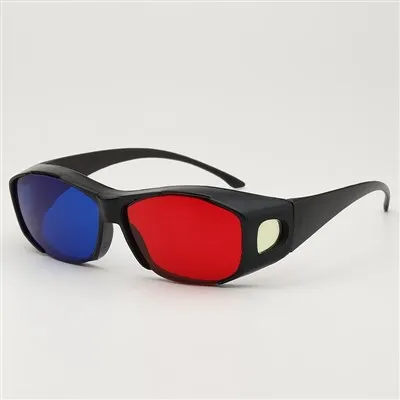
First, let’s talk about the two main types of 3D glasses that go through my warehouse—because how long they last totally depends on which one you’re using. Half the orders I fill are linear polarized (that’s the thin, foldable plastic kind you use at most movie theaters, right?) and the other half are active shutter—those bulkier ones you see at IMAX or home theater setups. They’re totally different when it comes to durability. Let’s start with the disposable linear polarized ones because those are the most common and the ones that people usually ask about first.
Disposable polarized glasses: these are basically thin plastic lenses taped to a paper or plastic frame, right? The ones you grab by the handful at the concession stand. How long do these last? I see all kinds of numbers online that are either way too high or way too low. Here’s the real tea: if you handle ‘em like they’re worth something, they can last 15–25 uses. But if you’re treating ‘em like garbage—throwing ‘em on the floor, stepping on ‘em, leaving ‘em in a hot car, or wiping ‘em down with a rough rag that scratches the lenses—they might crap out after 3 or 4 uses. Wait, what makes them stop working anyway? Let’s get into the science without the boring textbook stuff. Polarized lenses work by letting only light waves aligned a specific way through each lens. If the lens gets scratched, the alignment gets messed up—so you get that weird double-image or “ghosting” that makes movies unwatchable. Also, if the plastic frame bends too much, the lenses shift out of alignment, and boom, same problem. Hot temperatures are a big one, too. Leave a stack of disposable glasses in your car on a 90-degree summer day? The plastic lenses warp, and the polarizing coating peels off. I had a theater customer last year who left 200 disposable glasses in his trunk over a weekend—when he opened ‘em, half had lenses that looked like a messed-up puzzle. Told me he had to toss ‘em all and reorder last minute, which cost him a ton in rush fees. Oops.
Now, active shutter glasses—these are the rechargeable ones, right? The ones that sync with a special emitter on your projector or TV. These are way more expensive than disposable ones, so people expect ‘em to last longer, and they do—sort of. But they have different weak points. Let’s break it down: the physical parts (frame, lenses, hinges) vs. the electronics inside. The physical parts can last a long time—if you drop ‘em from a couch height, they usually hold up, but drop ‘em off a stage or step on ‘em, the arms break and that’s basically game over. The electronics, though? The rechargeable batteries are the main thing that dies on these. I see a lot of people not knowing how to take care of the batteries—leaving ‘em dead for months, overcharging ‘em, or not storing ‘em properly. A good set of active shutter glasses, if you take care of ‘em, will last 2–3 years. But if you’re always leaving the battery dead, or charging it every time you get a chance, that lifespan cuts in half. Also, the sync tech inside—if you get moisture in the electronics (like if you spill a soda on ‘em), that usually kills ‘em fast. I had an arcade owner come to me last month with 5 active glasses that his staff spilled soda on over a weekend—none worked, because the circuit boards shorted out. That’s why I always tell people: for active glasses, don’t mess with the insides, just keep ‘em dry and charge ‘em when the battery gets low, not when it’s completely dead.
Wait, let’s talk about factors that affect all 3D glasses, no matter the type. First, cleaning. A lot of people wipe their 3D glasses with old t-shirts or paper towels—those are full of lint and tiny scratches. I recommend using a microfiber cloth (the kind you use for sunglasses) and a little lens cleaner, not window cleaner. Window cleaner has ammonia, which eats away at the polarizing coating on the lenses over time. That’s a super common mistake—customers tell me their glasses were working fine, then after a few weeks of cleaning with Windex, they get ghosting. Busted. Second, storage. Don’t just leave glasses lying on a table or in a random drawer. For disposable ones, keep ‘em in a cool, dry place—never a hot attic or a car trunk. For active glasses, use the little carry cases most come with, so they don’t get stepped on or scratched. I sell those cheap microfiber cases as an add-on to orders, and 9 out of 10 customers tell me it doubled their active glasses’ lifespan. Third, handling. I see so many theater workers grabbing glasses by the lenses, not the frames— that bends the lenses out of alignment. Or folding active glasses the wrong way, which snaps the arms. Just teach your staff to pick ‘em up by the plastic frame, not the lenses, and don’t over-fold disposable ones. That tiny habit saves so many glasses.
Now, what about the weird edge cases? Like, what if you have glasses that are “good” but the lenses look fine, but they still won’t work? For active glasses, that’s usually the battery. I get tons of customers messaging me saying “my active glasses are broken” and it’s just a dead battery. They didn’t charge ‘em for a month, and the battery lost its charge. Simple fix, not a broken glass. For polarized glasses, sometimes it’s just dust on the lenses—wipe ‘em down, and they work like new. I had a customer last week who thought 50 of his disposable glasses were trash, but it was just dust from being stored in a dusty closet. He wiped ‘em, and they were good to go. That’s another thing: before you toss a stack of glasses, test a few. Don’t just assume they’re all broken.
Wait, let’s talk numbers again, make this concrete. Let’s say you’re a small movie theater that goes through 100 disposable glasses a week. If you handle ‘em right, each lasts 20 uses, so 100 a week is 2000 uses total, so that’s 20 weeks of use before you have to reorder. But if you handle ‘em wrong, each lasts 5 uses, so that’s 5 weeks, so you’re reordering 4 times a month, which is way more expensive in the long run. For active glasses, if you have 50 of ‘em, and each lasts 2 years, that’s 2 years before you need to replace half, and another 2 before the rest. But if you don’t take care of ‘em, you’re replacing 10 a year, which adds up. I always tell customers to budget for that—don’t just buy the cheapest glasses, because the lifespan will be shorter, and you’ll spend more money replacing them all the time.
Another thing I see a lot: counterfeit glasses. A lot of people buy super cheap 3D glasses from Amazon or random websites, not from a real supplier like me. Those knockoff glasses have cheap polarizing coatings that wear out way faster—like, 3 uses max. The plastic is thin, so it scratches easy, and the frames bend if you look at ‘em wrong. I had a customer who bought 1000 cheap polarized glasses from a random seller, and half of them were broken after a week of use. He came to me to reorder, and I told him he spent more on those cheap ones than he would have if he bought good ones from the start. That’s a big tip: buy from a reputable supplier, not the lowest bid. It might cost a little more upfront, but the lifespan is way longer, so you save money long term.
Let’s wrap this up with what I actually tell all my customers when they ask about lifespan. Disposable polarized glasses: 10–20 uses, if you take care of ‘em. If you’re rough with ‘em, 3–5. Active shutter glasses: 2–3 years, if you keep ‘em dry, charge ‘em right, and store ‘em in cases. If you abuse ‘em, 6 months to a year. And the biggest thing: small habits (cleaning right, storage, handling) can double or even triple the lifespan of any 3D glasses.
Now, if you’re a theater owner, arcade operator, event planner, or anyone who needs a steady supply of good 3D glasses that actually last, hit me up. I don’t do those cheap knockoffs that break after a week—all our glasses are tested to hold up to regular use, and I can help you figure out how many you need, what type is best for your space, and how to keep ‘em working as long as possible. No rush, no pressure, just shoot me a message. I’ve been in this game long enough to know what works, and I’m here to help.
Sport Sunglasses References
- Consumer Technology Association. (2022). Durability Guidelines for Consumer Display Accessories.
- International Organization for Standardization. (2019). Performance Requirements for 3D Viewing Devices.
- Theater Owners of America. (2021). Concession Supply Lifespan Best Practices Report.
- Journal of Display Technology. (2020). Degradation Mechanisms in Polarized and Active-Shutter 3D Glasses.
Yiwu Suki Glasses Co., Ltd.
As one of the most experienced 3d glasses manufacturers and suppliers in China, we also support customized service. We warmly welcome you to wholesale high quality 3d glasses at competitive price from our factory. Contact us for more details.
Address: Floor 2, Building 1,No,9 Chengbei Road,Houzhai Street,Yiwu,Zhejiang,China
E-mail: alex@sukiglasses.com
WebSite: https://www.suki-glasses.com/
