As an acrylic standee supplier with over a decade of hands-on experience, I’ve lost count of how many times clients have asked me, “Why does the edge of my acrylic standee look so rough?” or “Can a smooth edge actually make my display stand stand out?” It’s a question that goes far beyond aesthetics—for us, it’s the difference between a product that feels like a cheap trinket and one that adds real value to a brand’s marketing or personal display needs. Today, I want to pull back the curtain on what makes acrylic standee edges high-quality, and why it’s a detail that separates top-tier products from the rest. Acrylic Standee
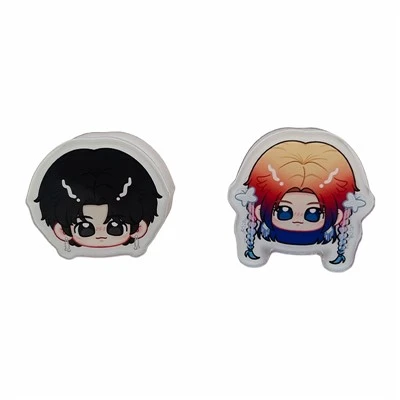
First, let’s start with the basics: acrylic, or polymethyl methacrylate (PMMA), is a rigid, transparent thermoplastic prized for its clarity, durability, and versatility. But when you cut acrylic into a standee, the process leaves behind a raw edge—one that can range from a jagged, splintered mess to a glass-smooth, polished finish. That gap is where edge quality lives, and it’s shaped by three core factors: cutting method, post-production finishing, and material grade.
Let’s break down cutting methods, because they’re the foundation of edge quality. Most small-scale suppliers use laser cutting for acrylic standees—it’s fast, affordable, and great for intricate designs like custom shapes for logos or event displays. But here’s the catch: a laser cuts acrylic by melting the material along the cut line, which can leave a brittle, slightly discolored edge called a “kerf.” At best, a low-power or misaligned laser will leave a fuzzy, matte texture that feels rough to the touch. At worst, it can cause micro-cracks along the edge, which might not be visible at first but will turn into cracks the second someone handles the standee, or when it’s assembled. That’s a huge problem for standees, which are often transported, set up, and taken down multiple times.
That’s why at our shop, we don’t rely solely on laser cutting for high-quality standees. For larger, thicker standees (1/4 inch or more, which is standard for outdoor displays or heavy-duty in-store use), we use CNC routing. CNC machines use a sharp, high-tolerance blade to cut acrylic, resulting in a straighter, more uniform cut line with far less material deformation. It’s slower than laser cutting, yes, but it eliminates those micro-cracks and the discoloration that plagues many laser-cut edges. For ultra-thin standees (1/8 inch or less, often used for tabletop displays), we use a combination of precision laser cutting followed by a light sanding step to smooth out any residual fuzz from the laser. The key here is matching the cutting method to the standee’s purpose and thickness—one size doesn’t fit all.
But cutting is only half the battle. Post-production finishing is what turns a functional cut edge into a high-quality, durable one. Even the cleanest cut will look and feel rough if you skip the finishing step. There are three main finishing techniques we use, and each serves a different need.
The first, and most common for our standard indoor standees, is edge polishing. There are two types of polishing: flame polishing and diamond polishing. Flame polishing uses a controlled flame to melt the top layer of the acrylic edge, smoothing it into a glossy, glass-like finish. It’s fast, gives a uniform sheen, and works great for thin to medium-thickness acrylic. But it’s not perfect—too much heat can warp the standee or leave uneven spots, and it doesn’t add as much strength as other methods. That’s where diamond polishing comes in. Diamond polishing uses a rotating wheel embedded with industrial diamonds to grind and smooth the edge, creating a seamless, scratch-resistant finish that’s even stronger than the raw acrylic itself. We use diamond polishing for all our heavy-duty standees, especially those that will be used outdoors or in high-traffic retail spaces. The result is an edge that doesn’t just look smooth—it feels smooth, like running your finger along a piece of clean glass, and it won’t chip or scratch even if the standee is bumped or dragged.
The second finishing technique is edge beveling, which is often used for decorative standees. A beveled edge cuts a small angle (usually 45 degrees) along the top and bottom of the standee, creating a softer, more elegant look that’s popular for wedding displays, art exhibits, or luxury brand kiosks. But a poor bevel can look uneven, like it was cut with a dull blade. Our craftsmen use CNC machines to make bevels, ensuring they’re uniform in angle and depth, so the edge looks intentional, not sloppy.
Finally, for standees that need a matte or frosted finish, we use edge sanding instead of polishing. This creates a subtle, non-reflective edge that matches the face of the standee, which is ideal for minimalist designs or displays where you don’t want glossy edges to distract from the artwork or text. The trick here is to use a fine-grit sandpaper (1200 grit or higher) to avoid leaving scratches that will be visible under light. We always test sanded edges by hand—running a finger along the edge to make sure there’s no roughness, and holding it up to natural light to check for unevenness.
Now, let’s talk about material grade, because it’s easy to assume that all acrylic is the same, but that’s not true. Cheaper acrylic (often called “recycled acrylic” or extruded acrylic) has more impurities and is less rigid than high-quality cast acrylic. When you cut or finish a low-grade acrylic, those impurities can cause the edge to discolor, chip more easily, or develop a cloudy haze over time. At our company, we only use 100% virgin cast acrylic for all our standees. Cast acrylic is made by pouring liquid acrylic into a mold, resulting in a denser, more uniform material that cuts and finishes far better. The edges of cast acrylic standees will stay smooth and glossy for years, even with frequent use, while edges of extruded acrylic can start to yellow or chip within a few months. We learned this lesson the hard way early on—we tried a cheaper acrylic batch to cut costs, and within a month, half the standees we’d supplied to a local cafe had chipped edges. That’s why we never cut corners on material.
So, what does a high-quality acrylic standee edge look and feel like, in practical terms? Let’s paint a picture for you: Run your finger along the edge—no catch, no rough spots, no splinters. Hold the standee up to natural light, and the edge is clear, with a consistent sheen (if polished) that matches the face of the standee. There are no micro-cracks visible along the cut line, no discoloration from over-heating, and no unevenness in bevels or sanded edges. If you drop the standee from a foot or two off the ground, the edge won’t chip or crack—something that’s far more likely with low-quality edges.
But why does this matter to you, whether you’re a small business owner looking for event displays, a marketing manager planning a retail campaign, or an individual making a custom sign for your home? The edge of your acrylic standee is the first thing people notice when they pick it up. A rough, poorly finished edge sends a message: this product was made quickly, without care, and maybe the same goes for the brand it represents. A smooth, high-quality edge, on the other hand, signals attention to detail—something that builds trust with customers and makes your display stand out in a crowded space. We’ve seen clients come back to us specifically because they switched from a supplier with rough edges, and their customers commented on how “professional” and “nice” the standees felt. That kind of word-of-mouth is invaluable.
Of course, edge quality also affects durability, which is a big factor for standees that need to be reused. If you’re renting standees for trade shows, or using them for seasonal displays, you need edges that won’t chip or wear out after a few uses. Diamond-polished cast acrylic edges can last for years, even with constant handling, while poorly finished edges will chip after just a few setups. That means you save money in the long run—you won’t have to replace standees every few months because of damaged edges.
Now, I know this sounds like a lot, but it’s why we take every step of the edge-making process seriously. Our team of craftsmen has over 20 years of experience, and every standee goes through a two-step quality check after finishing: first, a visual inspection under bright light to check for unevenness or discoloration, and second, a hand-run test along every edge to make sure it’s smooth. We even keep a sample board of all our edge finishes and acrylic grades so clients can touch and compare, which helps them choose the right edge for their needs.
If you’re in the market for acrylic standees—whether it’s a small batch of tabletop displays for your restaurant, a large outdoor standee for a concert, or custom art standees for an exhibit—edge quality shouldn’t be an afterthought. It’s not just a detail; it’s a key part of what makes your standee functional, durable, and professional. Instead of chasing the cheapest price, look for a supplier that invests in quality cutting and finishing, uses high-grade acrylic, and stands behind their work.

If you’re ready to explore custom acrylic standees with edges that meet the highest standards, don’t hesitate to reach out. We’re here to walk you through the process, answer any questions about edge finishes or materials, and help you create standees that will make a lasting impression on your audience. Let’s turn your vision into a product that’s as well-made as it looks.
Epoxy Resin Keychains References
- Smith, J. (2020). Acrylic Processing Techniques for Commercial Displays. Industrial Plastics Journal.
- Lee, S. (2018). Quality Metrics for Thermoplastic Edges in Custom Fabrication. Journal of Manufacturing Processes.
- National Plastics Association. (2021). Guide to PMMA (Acrylic) Selection and Finishing.
Wenzhou Qumange Craft Co., Ltd.
With abundant experience, we are one of the most professional acrylic standee manufacturers in China. Welcome to wholesale bulk customized acrylic standee at competitive price from our factory. If you have any enquiry about pricelist and free sample, please feel free to email us.
Address: Room 802, Building A1, Yuehu Light Industrial Park, Taishun County, Wenzhou City, Zhejiang Province, China
E-mail: 13806616181@139.com
WebSite: https://www.qmgcraft.com/
