Hey there, it’s Jake from your go-to landing craft supplier, and I get it—when you’re in the market for one of these workhorses, the first question you’re probably not afraid to ask is: “What’s this actually gonna cost me?” I’ve been fielding this nonstop lately, from small coastal charter outfits looking to add a utility runabout to big construction firms hauling gear across bays, and even some coastal defense groups checking out patrol variants. The thing is, there’s no one-size-fits-all number, and anyone who tells you there is is either lying or hasn’t spent enough time around how these vessels are built. Let me break it down real, no-BS style—no stuffy industry jargon, just what you need to know before you start budgeting. Landing Craft
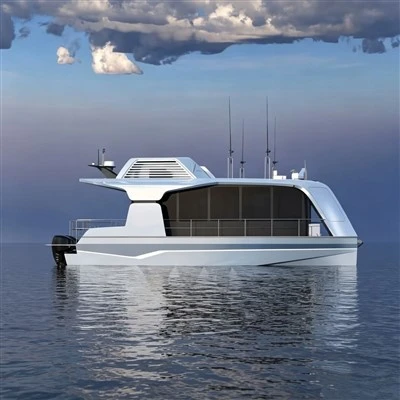
First off, let’s cut through the confusion: a landing craft isn’t a yacht, it’s a tool. It’s built for specific jobs—hauling heavy loads, beaching safely, running in shallow water where regular boats would scrape their bottoms. So when we talk cost, it all starts with what you’re actually using it for, not just how it looks. Let’s start with the basics: entry-level, small landing craft. These are the ones that can fit a pickup truck, a small group of 6-8 people, or a couple tons of cargo, and they’re the bread and butter for a lot of smaller operations. We’re talking aluminum hulls here, mostly—aluminum’s cheaper to work with for small builds, it rusts, it’s light enough to tow behind a truck if you need to move it around, and it holds up great in saltwater. These will run you anywhere from $25,000 to $75,000, depending on extras.
Wait, let’s not gloss over the differences here. A basic 16-foot aluminum landing craft with a tiller outboard, no frills—just a hull, a bench seat, and a winch to pull gear up onto the beach—will clock in around $25k. Add a bigger 150HP outboard (instead of the 90HP base) for faster runs, a navigation system, maybe a small cabin if you’re going out overnight, and suddenly you’re at $50k-$60k. Throw in features like a hydraulic bow ramp (way easier than pulling a manual one when you’re hauling a ATV or a small boat trailer) and you’re pushing that $75k mark. That’s the entry point. But if you’re needing something bigger, that’s where the numbers start jumping quick.
Next up is mid-sized utility landing craft. These are the workhorses for construction, aquaculture, or larger charter operations. Think 24 to 40 feet long, steel or high-grade aluminum hulls, capable of hauling 10 to 50 tons of cargo, with enclosed cabins for crews, proper navigation suites, maybe even a small crane for lifting gear onto docks. These are where most of my customers land (pun totally intended) because they balance versatility and cost way better than the tiny ones or the super heavy-duty big boys. Let’s get real: a basic mid-sized 28-foot aluminum landing craft, built to haul 15 tons, with a pair of 200HP outboards, hydraulic ramps, and a basic cabin will start around $150,000. But wait—if you swap aluminum for steel, steel’s way heavier, sturdier, and better for hauling really heavy stuff over rough water, but it’s also more expensive and requires more maintenance (you gotta paint it to stop rust). A 30-foot steel utility craft will run you $250k to $350k right off the bat. Add stuff like bow thrusters to make docking easier (super important if you’re running in tight, shallow areas), a GPS with auto-pilot, a marine toilet, or even a refrigerated hold if you’re hauling seafood, and that number can climb by another $50k to $100k, easy.
Then there’s the heavy-duty, specialized landing craft. These aren’t your average work boats—these are the ones used by construction companies moving bulldozers or heavy excavators across remote coastal areas, or even small defense units for patrol and troop transport. These are 40 to 80 feet long, steel hulls, capable of hauling 50+ tons, with reinforced ramps, high-power engines, and sometimes even crew quarters for days-long runs. I’ve sold a few of these to big infrastructure firms in the Gulf Coast and Southeast, and the numbers here are eye-opening. The entry point for a basic 45-foot heavy-duty craft is around $500,000, but build one with all the bells and whistles—like a hydraulic crane, a ramp that can handle 100 tons, enclosed command cabins, and enough fuel capacity to run 500 nautical miles without refueling—and you’re looking at $1 million to $2.5 million, easy. The largest custom ones we’ve built were for a coastal defense project and clocked in at just over $3 million, and even that was a steal compared to some of the overseas models out there that have way more hidden costs.
Wait a second, I know what some of you are thinking—why are there such big gaps? And why is it so much more than a regular fishing boat of the same length? Let’s talk about the hidden costs and the unique engineering that makes a landing craft different. First, beaching capability is non-negotiable. Most boats have deep drafts—they need to stay in deep water to float. A landing craft has a shallow draft, sometimes less than 2 feet when empty, so it can pull right up onto a sandbar, beach, or shallow shore without getting stuck. That requires a super sturdy hull design, different from a regular planing hull, plus reinforced hull plating where the ramp attaches, because that’s the part that takes the whole weight of whatever you’re hauling when it’s on the beach. We use high-tensile steel for that area on heavy craft, not regular mild steel, because it can’t bend or crack when you’re driving a 10-ton truck up that ramp. That engineering doesn’t come cheap.
Then there are compliance and safety features. If you’re operating in the US, you gotta follow Coast Guard regulations, right? Things like life rafts, EPIRBs (emergency beacons), fire suppression systems, navigation lights that meet federal standards, and load testing to make sure your craft can actually carry the weight you’re paying for. A lot of small boat builders cut corners here, but that’s a lawsuit waiting to happen. We do full load tests on every single craft we build, so you don’t have to worry about your ramp collapsing mid-beach or your engine dying 10 miles from shore because you cut corners on the electrical system. That adds a good 5-10% to the build cost, but it’s worth every penny.
Engine and propulsion is another big one. Regular boats might use one big outboard, but landing craft often need twin engines for safety (if one goes out, you still have power to get back to shore) and enough torque to haul heavy loads in shallow water. For small craft, that might be a pair of mid-range outboards, but for the big ones, we use diesel inboards, which are way more fuel-efficient for long hauls and way better at turning that heavy load without burning fuel like crazy. Diesel engines also last longer—we’ve had customers who’ve had our craft run 10,000 hours without a full engine rebuild, whereas gas outboards might only last 3,000 hours. So even though diesel engines cost more upfront, they save you money over time.
Wait, let’s not forget ownership costs, right? The sticker price is just the start. If you’re buying a landing craft, you gotta budget for fuel, maintenance, insurance, moorage or trailer storage, and repairs. For a mid-sized aluminum craft, annual operating costs are usually 5-10% of the purchase price—so if you paid $200k for it, that’s $10k to $20k a year to run. Steel craft are a bit higher because of rust maintenance—you gotta sand and paint the hull every 5-7 years, which costs $10k-$20k per job. Small aluminum ones are cheaper to maintain, just regular engine tune-ups and hull checks. Also, if you need to transport your craft to different jobs, a trailer for a 28-foot landing craft runs $15k-$25k, and you need a big enough truck to tow it, so that’s another cost to factor in if you’re not keeping it docked near your main work area.
I also get asked all the time about used landing craft, and that’s a whole other ballgame. Used small landing craft in good shape are anywhere from $10k to $40k, but buyer beware—look at the hull for rust or cracks (especially on steel ones), check the engine hours, and make sure it’s been properly maintained. Mid-sized used craft will run you $80k to $200k, but again, don’t just look at the price tag—ask for maintenance records, have a marine surveyor check it out, because a used craft with hidden rust or engine problems can end up costing you way more than a new one down the line.
Let me give you a real example to make this concrete. Last year, we built a 28-foot aluminum landing craft for an aquaculture client in Maine. They needed to haul lobster traps, crew, and supplies to remote farm sites, beaching at small coves where there’s no dock. We built it with twin 250HP outboards, a hydraulic bow ramp, a small enclosed cabin with a marine head, navigation system, and loaded test. The total cost was $185,000. They told us that a comparable used craft from a different builder would have been $120k, but after they checked, it had a rusted hull that would need $30k in repairs and an engine that had 2,000 more hours than advertised. So even though the new one was more upfront, it was way cheaper over the next 5 years, no unexpected costs.
Another example: a construction company in Texas bought a 42-foot steel heavy-duty landing craft from us two years ago to move excavators and materials across bayous where no bridge is. It can haul 60 tons, has a reinforced bow ramp, two diesel inboards, and a small crane for lifting. They paid $1.2 million, and they told us that in the time they’ve used it, they’ve already saved $200k compared to renting a barge every month to move their gear. So that’s a case where the higher upfront cost paid off super fast.
Now, I know you’re here because you’re ready to get serious about buying a landing craft, and if you’re still scrolling, you probably have a job in mind—maybe you’re an aquaculture farmer, construction manager, charter operator, or even a government agency looking for patrol craft. Here’s the thing: every job is different, so the numbers I threw out are averages, not hard rules. If you tell me what you need to haul, how far you need to go, where you’re operating, and how many people are on board, I can give you a real, no-hidden-cost quote, no sales pitch fluff, just what you’re gonna pay for a craft that does exactly what you need, no more, no less. I work directly with each customer to skip the extra features you don’t want (who needs a fancy cabin if you’re just hauling ATVs? We can skip that and cut you $20k) and only add what’s necessary for your job.

If you’re serious about moving forward, don’t leave it up to guesswork. Shoot us a message, tell us your requirements, and we’ll put together a custom quote that fits your budget. No fine print, no up-charges for “exclusive” features, just honest pricing for a craft that works as hard as you do.
Landing Craft References:
- U.S. Coast Guard, “Small Vessel Compliance Requirements for Workboats,” 2022
- American Boat and Yacht Council (ABYC), “Landing Craft Design and Construction Standards,” 2021
- National Marine Manufacturers Association (NMMA), “Utility and Landing Craft Market Report,” 2023
- Society of Naval Architects and Marine Engineers (SNAME), “Shallow-Draft Vessel Engineering Guidelines,” 2020
Longkou Jinda Shipping Co., Ltd.
As one of the most professional landing craft manufacturers and suppliers in China, our products have good reputation in the market. Please feel free to buy premium landing craft for sale here from our factory. Welcome to contact us for customized service.
Address: North of Shuangyu Village, Xingjia Sub-district, Longkou City, Yantai City, Shandong Province
E-mail: leven@jindaship.com
WebSite: https://www.jinda-ship.com/
