If you’ve ever driven past a construction site, agricultural field, or even a residential landscaping project where dirt looks smooth, uniformly blended, and ready for planting or foundation work, chances are a rotary soil mixer did the heavy lifting behind that result. As a soil mixer supplier who’s spent nearly a decade working with contractors, farmers, and landscape crews across the Midwest, I’ve seen firsthand how this piece of equipment is more than just a “mixing tool” — it’s a game-changer that turns uneven, unusable soil into a consistent, high-performance material. Let’s break down what a rotary soil mixer actually is, how it works, and why it’s become an indispensable part of so many projects. Soil Mixer
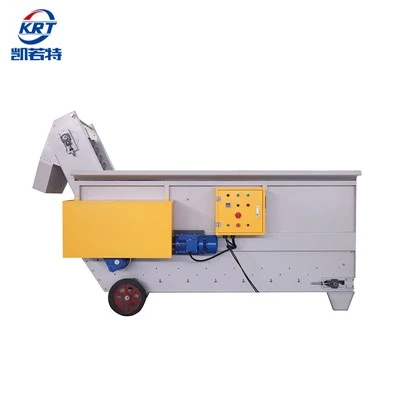
First, let’s get clear on the basics: a rotary soil mixer is a mobile or stationary machine designed to till, blend, and homogenize soil (and often other amendments like compost, sand, or fertilizer) by using a rotating drum or mixing chamber fitted with internal blades, tines, or paddles. Unlike traditional tillers, which merely churn the top layer of soil and leave uneven clumps or unblended amendments, a rotary soil mixer’s design is built for full, controlled mixing. The core function is to eliminate inconsistencies in soil composition: think rocks buried deep in clay, uneven nutrient distribution, or layers of different soil types that would cause problems for planting, drainage, or structural work.
Let’s walk through how it operates, because that’s where the science of the machine really shows. Most industrial models (the ones we supply for large-scale projects) feature a heavy-duty steel drum — some range from 10 cubic feet for small landscaping jobs up to 100 cubic feet or more for road construction or large farm fields. Inside that drum, a horizontal axle runs the length of the chamber, lined with a series of staggered, angled mixing blades. When the drum is powered by a diesel engine or electric motor, the blades spin at a controlled speed — usually between 50 and 150 RPM, depending on the material being mixed — to lift and tumble soil as the drum rotates. That tumbling action is key: it doesn’t just chop up clumps, it moves every particle of soil through the entire volume of the drum, so no part is left untouched. For example, if you’re mixing topsoil with peat moss and a slow-release fertilizer, the tumbling ensures every handful has the same ratio, instead of having pockets of pure fertilizer at the bottom and unamended soil on top.
It’s important to distinguish rotary soil mixers from other similar equipment, because I get this question all the time from new customers. A garden tiller (or rototiller) is small, designed for residential use, and only tills the top 6 to 12 inches of soil. A rotary soil mixer, on the other hand, can handle depths up to 3 feet or more in industrial models, and it’s built for full homogenization, not just tilling. Then there’s a cement mixer — that’s another common mix-up. Cement mixers rotate to agitate concrete, which is a thick, viscous paste. Rotary soil mixers are built for lighter, more variable materials: soil can range from loose sand to dense clay, and often includes debris like roots, rocks, or construction waste. The blades on a soil mixer are shaped to break up those rocks and clods, not just keep a paste moving, so they’re much more durable and versatile for earthy materials.
Now, why does this matter? Let’s talk about the real-world applications, because that’s where our customers see the value of a rotary soil mixer every single day. For agricultural operations, especially on organic farms or specialty crop farms, consistent soil is non-negotiable. If a field has patches of soil with too much clay, plants won’t root deeply and will suffer from waterlogging; patches with too much sand will drain too fast and dry out. A rotary soil mixer can amend 10,000 square feet of field in a fraction of the time it would take to mix soil by hand or with small equipment. For landscape contractors, mixing topsoil with compost and loam to create a custom planting mix for a new subdivision or botanical garden means every bed has the same nutrient content, so trees and shrubs grow uniformly — no stunted growth in one corner because of uneven soil. For construction crews, rotary soil mixers are used for soil stabilization: mixing lime or cement into loose, weak soil to make it strong enough to support a foundation or road, which cuts down on construction time and reduces long-term structural issues. Even residential landscaping teams use smaller rotary soil mixers for large backyards, saving hours of work spreading and blending amendments manually.
As a supplier, one of the things I’ve learned is that the right rotary soil mixer isn’t one-size-fits-all. A small, 10-cubic-foot unit works for a homeowner or small landscaping crew doing a few lawns a month, while a 50-cubic-foot tractor-mounted model is ideal for mid-sized farms, and a tracked, 120-cubic-foot stationary unit is used for large construction projects that require hundreds of yards of amended soil. We always ask customers to tell us what they’re using the soil for, and how much material they need to mix, because that’s how we help them pick the right machine for their needs.
I’ve seen common mistakes people make when they’re using a rotary soil mixer, too — things that end up costing them time or money. The biggest one is overfilling the drum. If you put more soil or amendments in than the machine’s capacity, the blades can’t tumble the material properly, leading to unblended clumps. Another mistake is not preparing the soil first: if there are large roots or construction debris, you should screen it out before loading it into the mixer, because those materials can bend or damage the internal blades. And it’s important to adjust the blade speed for different materials: dense clay needs a slower speed to break up, while loose sand can be mixed faster, which speeds up the process without sacrificing quality.
What’s next for rotary soil mixers? Over the past few years, we’ve seen a shift toward more sustainable, energy-efficient models. Many customers are asking for electric-powered mixers instead of diesel, to reduce their carbon footprint on farms and construction sites. We’ve also started offering mixers with integrated screening systems, so you can mix and refine soil in one step, cutting down on the need for a separate screening machine. That’s a big win for small operations that don’t have space for multiple pieces of equipment.
At the end of the day, a rotary soil mixer is more than just a piece of machinery — it’s a tool that turns raw earth into a material that works for whatever project you’re building or growing. Whether you’re a farmer looking to improve crop yields, a contractor needing stable soil for a new home, or a landscaper creating a public park that will thrive for decades, consistent, well-mixed soil is the foundation of every successful project.

If you’re tired of spending hours blending soil manually, dealing with uneven amendments, or watching crops struggle due to inconsistent soil quality, let’s talk. We can help you find the right rotary soil mixer for your specific needs, whether you’re a small operation just starting out or a large team looking to upgrade your equipment. Reach out to us to discuss your project requirements and get a personalized quote that fits your budget.
Seed Pelleting Machine References
- Soil Science Society of America. (2021). Soil Homogenization Methods for Agricultural and Landscaping Applications.
- American Society of Agricultural and Biological Engineers. (2022). Performance Standards for Rotary Soil Mixers.
- Construction Equipment Association. (2023). Soil Stabilization Technologies for Civil Construction Projects.
- Organic Trade Association. (2022). Soil Amendment Best Practices for Organic Farming Operations.
- National Road Builders’ Association. (2021). Soil Mixing Equipment Specifications for Road Construction.
Hebei Kai Ruote Machinery Manufacturing Company
As one of the most professional soil mixer suppliers in China, we’re featured by quality products and good price. Please rest assured to buy high-grade soil mixer for sale here from our factory. Contact us for more details.
Address: No.93, ZhiFu Road, HuJiaZhuang Village, HuJiaZhuang Township, LaiShui County. Baoding City, Hebei Province, China
E-mail: nongruide.sale01@gmail.com
WebSite: https://www.krtseeder.com/
