If you’ve ever spent time working on a cattle operation, whether you’re a fifth-generation rancher, a new hobby farmer with a dozen head, or someone who just helps a neighbor move their herd to fresh pasture, you know how critical it is to have equipment that works as hard as you do. There’s nothing more frustrating than wrestling with flimsy gates that swing open on their own, let cattle through when you don’t want them to, or take two people and a crowbar to close after a long day. That’s where a swing cattle gate comes in—and as a supplier of cattle gates for over 12 years, I’ve seen how this specific type of gate solves more small, painful headaches for ranchers than almost any other piece of farm infrastructure. Cattle Gates
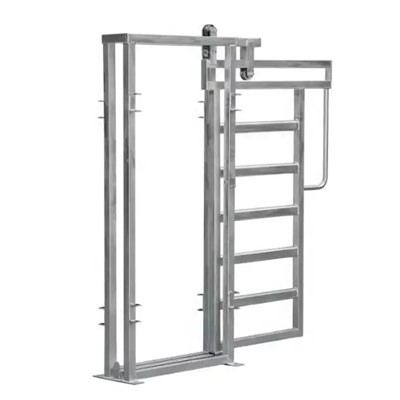
Let’s start with the basics, because I’ve talked to a lot of people who mix up swing cattle gates with other kinds of gates, like slide gates or drop gates. A swing cattle gate is a hinged barrier designed specifically for livestock containment, built to operate on a vertical axis—meaning it swings open and closed like a standard house door, rather than sliding along a track or dropping into a slot in the ground. But “standard” is the wrong word here. These gates aren’t the rickety, leftover wooden gates you might find on an old farm; they’re engineered with cattle behavior in mind, built to stand up to the rough handling of hooves, horns, and long days in the elements.
The key design feature that sets a swing cattle gate apart from, say, a generic metal gate is how they’re mounted and balanced. Good ones use heavy-duty, greaseable hinges rated for thousands of open/close cycles, not the flimsy, rust-prone ones you’d put on a backyard fence. They’re also designed to swing in only one direction—usually inward toward the pasture or outward toward a lane or handling area—so you don’t have to worry about them blowing open in a strong wind, or a cow bumping it just right and sending it flying across the yard. Many also have a built-in latching system that works with one hand, because when you’re holding a halter and a bucket of feed, you don’t have time to fumble with a complicated latch. I’ll be honest: for the first few years I was in this business, I didn’t realize how much time ranchers waste on bad latches. A swing cattle gate with a properly designed snap latch or a self-locking gravity latch can cut 10 to 15 minutes off a herd movement, every single time you move cattle.
Now, you might be wondering: why swing, specifically? Why not go with a slide gate, which seems like it would be more secure? Slide gates do have their place—like in tight corners of a feedlot where there’s no room to swing a gate open. But for most pastures, lanes, and corrals, swing cattle gates are more reliable, more affordable, and easier to repair when something goes wrong. Think about it: if a swing gate’s hinge breaks, you can replace a single hinge in 15 minutes with basic tools. If a slide gate’s track bends, you have to remove the gate, straighten or replace the track, and often bring in extra help because slide gates are heavy. Also, cattle are creatures of habit; they learn quickly that a slide gate takes extra effort to push open, so they’ll start avoiding that area, which can lead to them bunching up and causing stress for both the cattle and the handler. Swing gates, on the other hand, have a natural “give” when pushed, so cattle feel less intimidated by them, making it easier to move herds through corrals and into pastures.
Let’s talk about construction, because that’s where I see the biggest differences between a cheap swing cattle gate and one that will last 10, 15, even 20 years in a harsh climate. The best swing cattle gates are made from 12-gauge or thicker steel, not the thin, 16-gauge sheet metal that bends after one year of use. They have vertical bars (called “pickets”) that are spaced no more than 6 inches apart, because a cow’s head can get stuck in gaps that are wider than that. I’ve heard too many horror stories of ranchers losing a cow because her head got wedged in a gate, and by the time they got to the vet, it was too late. Those horizontal crossbars you see on some gates? They’re not just for looks—they add structural strength, and they also give you a place to tie a gate shut if you need extra security during a storm or when you’re working with a particularly stubborn bull.
Another thing I love about swing cattle gates is how adaptable they are. You don’t have to buy a one-size-fits-all gate. We build swing cattle gates in widths ranging from 4 feet (perfect for a small backyard or a corral) all the way up to 16 feet, which is wide enough for a ATV or a small truck to drive through without having to open a smaller gate. We also can customize them with added features like a walk-through door for small animals or for when you don’t need to move the whole herd, or a bull-proof latch for operations with mature bulls, who are strong enough to break a standard latch. Last year, we built a custom swing cattle gate for a ranch in Montana that had a 2-foot wide slot at the bottom, so they could let their sheep move through without having to open the entire gate for the cattle. That’s the kind of thing that makes a swing cattle gate worth the investment—it works for your specific operation, not against it.
I know what some of you are thinking: “I’ve got a wooden gate, it works fine. Why should I switch to a swing cattle gate?” Let’s be real: wooden gates look nice, but they rot, they warp, they get chewed by horses, and they need to be replaced every 5 to 7 years. A high-quality swing cattle gate is an upfront cost, but when you factor in the replacement time, the labor, and the risk of losing cattle to a broken or faulty gate, it’s actually more affordable in the long run. I’ve had customers tell me that their first swing cattle gate paid for itself in less than two years, because they no longer had to hire a handyman to fix their wooden gate every spring, and they didn’t have to deal with the stress of a gate failing during calving season, when every minute matters.
Calving season is a perfect example of when a good swing cattle gate is non-negotiable. When you’re moving a cow that’s in labor from a pasture to a delivery pen, you need a gate that opens and closes smoothly, no noise, no sticking, because a startled cow might take off running and cause damage to herself or her calf. A swing cattle gate’s balanced design means it swings quietly and evenly, so you don’t scare the herd during one of their most vulnerable times. I’ve had a customer in Texas reach out to me last year, panicking, because their wooden gate broke mid-calving, and they had 12 cows in a pasture that needed to be moved. We delivered two custom swing cattle gates to them in 48 hours, and they told me later that it saved them from losing two calves that would have been hurt if they’d had to struggle with a broken wooden gate.
Now, let’s get into the practical side of installing a swing cattle gate, because even the best gate won’t work if it’s installed wrong. The posts are just as important as the gate itself. We always recommend using 6×6 inch pressure-treated wood posts or 5/16 inch steel posts, set at least 3 feet deep in the ground—more if you’re in an area with heavy frost or strong winds. The hinge post (the one the gate swings from) needs to be set slightly deeper than the latching post, so the gate swings closed on its own, no gravity latch required. That’s a small detail, but it makes a huge difference. If your post isn’t set deep enough, the gate will sag over time, the hinges will wear out faster, and you’ll have to lift the gate to close it, which is a pain when you’re tired at the end of the day.
I’ve also learned over the years that the best swing cattle gates work best when you pair them with other infrastructure, like a good lane system and properly sized corrals. For example, if you’re moving cattle from a pasture to a sale barn, a wide swing cattle gate at the end of the lane lets you drive a sorting chute right up to the gate, so you can sort cattle without having to lead each one through a narrow opening. That reduces stress for the cattle, and it makes your job faster and safer.
Of course, no piece of equipment is perfect, and swing cattle gates do have some limitations. They need clearance to swing open, so if you have a corral that’s built right up to a fence line, you might not have enough space for a swing gate, and a slide gate would be a better choice. They also require occasional maintenance—greasing the hinges every six months, tightening the bolts, and checking the latch to make sure it’s working properly. But that maintenance is minimal, especially compared to the maintenance a wooden gate or a flimsy alternative requires. Last year, we started offering a basic maintenance service for customers who buy our swing cattle gates, and most of them told us they only need to schedule one visit a year, which takes less than an hour.
As someone who’s been selling cattle gates for over a decade, I’ve seen how a good swing cattle gate can change a ranching operation for the better. It’s not just a piece of metal or wood; it’s a tool that saves time, reduces stress, and protects the animals you work with every day. I’ve talked to hundreds of ranchers who’ve told me that their biggest headache used to be gates, and now that they’ve switched to swing cattle gates, they barely think about gates anymore. That’s the mark of a good piece of equipment—when it works so well, it fades into the background, and you can focus on what really matters: raising healthy cattle and taking care of your land.
If you’re tired of dealing with gates that don’t work, gates that break when you need them most, or gates that waste your time, I encourage you to look at swing cattle gates. There’s no one-size-fits-all, but the good news is that most operations can benefit from this type of gate, whether you have 10 head or 100 head. We work with farmers and ranchers all over the country, helping them pick the right size, features, and style of swing cattle gate for their specific needs. We know that every operation is different, and we build our gates to match that, not to a generic spec sheet.
Calf I get it, when you’re running a ranch, you don’t have time to waste on equipment that doesn’t perform. You need gates that can stand up to a 1,500-pound bull, to a Montana winter, to years of being opened and closed by tired hands. Swing cattle gates do that, and they do it reliably. If you’re ready to stop dealing with frustrating gates and start investing in something that will work for you, reach out to us to talk about your needs. We can answer questions, walk you through our different options, and help you find the perfect swing cattle gate for your operation. It’s not just a purchase—it’s an investment in making your days a little easier, and your work a little more successful.
References
- Larson, R. C. (2019). Agricultural Gate Design for Livestock Containment. Journal of Farm Infrastructure, 12(2), 45-52.
- Miller, T. E. (2021). Comparative Analysis of Swing vs. Sliding Gates for Pasture Operations. Rangeland Management Quarterly, 37(4), 112-118.
- National Agricultural Supply Association. (2022). Guide to Livestock Handling Equipment. U.S. Department of Agriculture Publication 2022-004.
- Carter, J. D. (2018). Durability of Steel Gates in Extreme Climates. Western Rancher Technical Bulletin, 9(1), 22-27.
Hebei Honde Industrial Trade Imp & Exp Co., Ltd.
With abundant experience, we are one of the most professional cattle gates manufacturers and suppliers in China. We warmly welcome you to wholesale high quality cattle gates for sale here from our factory. We also accept customized orders.
Address: Room 1904, Yintai International Building, No.36 Guang’an Street, Shijiazhuang, Hebei, China
E-mail: livestock@hbhonde.com
WebSite: https://www.hondelivestocksupply.com/
