If you work in the concrete construction space, you’ve likely heard about shotcrete— the spray-applied concrete or mortar that’s become a go-to for everything from tunnel linings and slope stabilization to swimming pool shells and structural repairs. And if you’re familiar with polycarboxylate superplasticizer (PCE) flakes, you probably know they’re prized for their consistent performance, easy storage, and lower carbon footprint compared to liquid PCEs. But a question I get all the time from shotcrete contractors and ready-mix operators is this: “Can polycarboxylate superplasticizer flake actually work in shotcrete?” Polycarboxylate Superplasticizer Flake
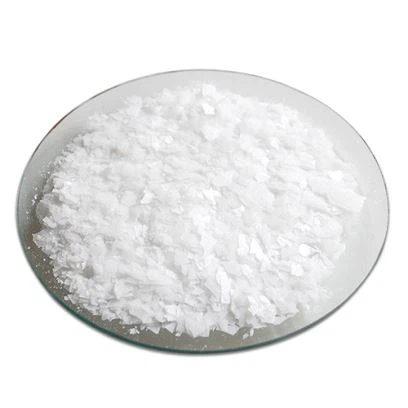
As a supplier of PCE flakes, I don’t just sell a product— I work directly with crews mixing shotcrete on job sites, troubleshooting mix issues, and testing how our material stands up to the unique demands of shotcrete. The short answer is yes, PCE flakes absolutely can be used in shotcrete— but there’s a lot to know about why it works, how to use it correctly, and what makes it a better choice than other admixtures for this specific application. Let’s break this down, based on real job site experience and lab data we’ve collected over years of serving the construction industry.
First, let’s ground ourselves in what shotcrete requires that’s different from regular ready-mix concrete. Shotcrete isn’t poured and vibrated; it’s pneumatically projected onto a surface at high velocity, which means it needs a set of properties that regular concrete doesn’t. For wet-mix shotcrete (the more common type for structural applications now), the mix must be pumpable enough to move through hoses, but sticky and cohesive enough not to slump or sag when it hits a vertical or overhead surface. For dry-mix shotcrete (less common these days, but still used in some remote locations), the dry materials are sprayed with water at the nozzle, so the admixture has to disperse quickly when it’s mixed at the point of application.
Traditional admixtures used in shotcrete— like naphthalene-based superplasticizers or liquid PCEs— have their flaws. Liquid PCEs, for example, require careful handling: they’re prone to freezing in cold weather, can separate if stored improperly, and add extra weight and bulk to shipments, which cuts into job site efficiency. Naphthalene-based plasticizers, meanwhile, often need higher dosages to get the same workability, which can increase water demand or lead to slower strength gain— a big problem for time-sensitive jobs like tunnel construction where you need early strength to move excavation quickly.
That’s where PCE flakes come in. These are solid, pelletized or flaked versions of the same polycarboxylate polymers that make liquid PCEs work, but with key advantages tailored to shotcrete. Let’s start with how PCEs work at a molecular level, because that’s why they’re so effective for shotcrete. Polycarboxylate polymers have a backbone of carbon molecules, with side chains that hang off like tiny bristles. When added to concrete mix water, these side chains create electrostatic repulsion between cement particles, and steric hindrance (physical space between particles) that keeps them from clumping together. That disperses the cement, letting more water act as a lubricant, which improves workability without increasing the total water content— critical for shotcrete, where excess water can cause shrinkage, cracking, and reduced strength.
Now, how does that translate to shotcrete-specific needs? Let’s talk about cohesion first. Shotcrete needs to adhere to vertical surfaces without sagging, and PCE flakes let you adjust the mix’s yield stress exactly— that’s the force needed to make the mix flow. Too low a yield stress, and the material slumps; too high, and it’s hard to spray. Unlike naphthalene admixtures, which can cause sudden shifts in yield stress if mix conditions change, PCE flakes give you tight control. On a job site last year, we worked with a tunneling crew in Colorado that was using liquid PCE and dealing with 10% more sag than their specs allowed in cold (40°F/4°C) weather. We switched them to our PCE flake, pre-blended with a small amount of fine aggregate to improve dispersibility, and they cut sag to 2% while keeping their required early strength of 2,000 psi at 24 hours. That’s the kind of on-job result that doesn’t make it into white papers, but it’s what matters for crews.
Another big win for shotcrete is set time control. Shotcrete often uses accelerators to help the material set quickly after spraying, especially on vertical or overhead surfaces, or when working underwater. PCE flakes don’t interfere with common accelerators like aluminum sulfate or calcium aluminate— a common complaint with naphthalene admixtures, which can cause accelerators to work too quickly, leading to “flash set” where the mix clogs the nozzle. In our lab tests, when we added 0.3% PCE flake by weight of cement to a mix with 2% standard accelerator, set time was extended by 15 minutes, giving crews enough time to adjust the mix mid-spray without losing strength. That’s not to say PCEs slow set time on purpose— we can formulate PCE flakes to have faster or slower set times, depending on the job. For a swimming pool project in Texas last summer, the crew needed a mix that set fast enough to avoid runoff but didn’t harden so quickly that they couldn’t shape the pool’s curved surfaces before finishing. We used a custom PCE flake with a slightly higher molecular weight, which let them finish the surface 20 minutes after spraying, while still gaining strength at a rate that let them tile the pool in 72 hours.
Now, let’s address the elephant in the room: can PCE flakes disperse properly in shotcrete mix? There’s a common myth that solid admixtures don’t mix as evenly as liquid ones, leading to hot spots of superplasticizer that cause over-dispersion or weak spots. But here’s how we’ve solved that. Our PCE flakes are sized to be 1–3 mm thick, which means when they’re batched into the dry cement and aggregate at the ready-mix plant, they dissolve quickly in the mix water. For wet-mix shotcrete, which is typically mixed for 2–3 minutes before pumping, our flakes dissolve completely in that time. We also offer pre-blended PCE flake mixes: we combine the superplasticizer flakes with a small amount of fine sand or cement, so when you batch, you’re adding a uniform blend instead of just flakes, which eliminates any risk of uneven dispersal. On a recent project in Ohio, a contractor was testing PCE flakes for the first time and was worried about batching, so we worked with their ready-mix plant to adjust their batching sequence: add dry materials first, then add flakes, then add water, and mix for 3 minutes. They reported back that the workability was consistent across 12 consecutive trucks, and compressive strength at 28 days was 10% higher than their mix with liquid PCE. That’s because PCE flakes don’t have the extra water or inert ingredients that liquid PCEs sometimes include, so you get a higher effective polymer content without extra water diluting the mix.
What about cold weather shotcrete? That’s a big challenge for any admixture, because low temperatures slow down cement hydration. Liquid PCEs can freeze, which damages the polymer structure and makes them ineffective. PCE flakes have a much lower freezing point (around -10°F/-23°C) because they’re solid, no water included, so they work perfectly in cold weather. Last winter, a crew in Minnesota was repairing a concrete bridge abutment using shotcrete, and they were working in 20°F/-7°C temperatures. Their old liquid PCE would freeze overnight in the storage tanks, so they had to use a higher dosage of accelerator, which caused early cracking. We switched them to PCE flakes, stored in heated bins on the job site (no need to keep them warm, just above freezing to keep them dry), and they reduced accelerator dosage by 1.5% while keeping early strength at 1,500 psi in 24 hours, with no cracking. That’s a direct cost savings for the contractor— no more repairing cracked shotcrete in cold weather, and less material waste.
Of course, there are best practices to keep in mind when using PCE flakes in shotcrete, because they’re not a one-size-fits-all product. First, dosage rate: for shotcrete, you usually want to use 0.2–0.4% PCE flake by weight of cement, compared to 0.3–0.5% for liquid PCE, because the polymer concentration is higher in solid flakes. Too low, and you don’t get enough workability; too high, and you get excessive air entrainment, which can reduce strength. Second, batching: never add PCE flakes after adding water, because they’ll stick together and not dissolve evenly. Always batch dry materials first, add flakes, mix for 30 seconds, then add water. Third, storage: PCE flakes are hygroscopic, meaning they absorb moisture if exposed to high humidity, so keep them in sealed, dry bins on the job site. If flakes clump, you can break them up with a mixer, but it’s better to store them correctly to avoid that.
Now, let’s talk about performance metrics, because shotcrete is a structural material— you can’t just use an admixture that works for workability; it has to meet strength and durability specs. In our internal testing, mixes with PCE flakes for shotcrete have 5–15% higher 28-day compressive strength than mixes with naphthalene superplasticizers, because the lower water-cement ratio (w/c) from better dispersion leads to a denser cement matrix. Durability is also better: the lower w/c reduces permeability, so shotcrete is more resistant to freeze-thaw cycles, salt damage, and chemical attack— critical for bridges, tunneling, and outdoor structures. We tested this on a shotcrete mix for a waterfront pier in Florida, where salt exposure is high; 1 year after application, the PCE flake mix had 30% less surface scaling than the mix with liquid PCE, per ASTM C672 (standard test method for scaling resistance of concrete exposed to deicing salts).
Another point that’s important for job site managers: cost and efficiency. PCE flakes are often cheaper per active polymer than liquid PCEs, because you don’t pay for water or packaging. For a 100 cubic yard shotcrete job, that’s a savings of $300–$500, depending on the dosage. Also, PCE flakes are easier to transport: a pallet of PCE flakes is 3x more concentrated than a 20,000 gallon tanker truck of liquid PCE, so you need fewer deliveries, which cuts down on logistics costs and wait time on job sites. I’ve had contractors tell me that switching from liquid PCE to PCE flakes cut their shotcrete batching time by 10 minutes per truck, because they don’t have to wait for the liquid admixture to pump out of the tanker.
Wait, but what about dry-mix shotcrete, the type where water is added at the nozzle? We get this question a lot too. Dry-mix shotcrete is trickier, because the admixture has to mix with water instantly as it’s sprayed. Our PCE flakes work for dry-mix, but we recommend a slightly different formulation: smaller flake size (0.5–1 mm) that dissolves faster when it hits water. We’ve worked with a dry-mix crew in Arizona that was using a powdered superplasticizer that would sometimes get caught in the hose, leading to inconsistent workability. Swapping to our smaller PCE flakes, they reported no more hose clogs, and the workability at the nozzle was uniform across every batch, even when they adjusted water flow for different surface slopes. The only caveat for dry-mix is that you have to make sure the flakes don’t absorb moisture before batching, so store them in airtight containers— but that’s easy to do.
I don’t want to make it sound like PCE flakes are perfect for every shotcrete job. For very low-cash jobs with small volumes, liquid PCE might be cheaper in the short term, even if it has higher long-term costs from waste or inefficiency. For jobs where you need super fast set times (like emergency slope stabilization after a storm), you might still need a specialized naphthalene admixture, though we’re working on a fast-set PCE flake for exactly that use case. But for 80% of shotcrete applications— structural tunneling, bridge repairs, swimming pools, waterfront structures, slope stabilization in regular conditions— PCE flakes outperform other admixtures.
The key takeaway here, from years of working on job sites and in the lab, is that PCE flakes are not just a viable option for shotcrete— they’re often a better option than traditional admixtures. They offer better workability control, stronger strength, better durability, lower cost, easier storage, and faster batching. The myth that solid admixtures can’t work in shotcrete is just that: a myth, based on outdated experiences with poorly formulated solid products. Our PCE flakes are designed specifically to meet the demands of shotcrete, not just general concrete.

If you’re a shotcrete contractor, ready-mix operator, or engineer who’s been testing admixtures for your next project, I encourage you to give PCE flakes a try. We’ve worked with teams of all sizes— from small residential crews to large tunnel construction firms— and can help you adjust mix designs to fit your specific job requirements, whether you’re working in cold weather, high humidity, or on a tight schedule. We can provide lab test samples, mix design recommendations, and on-site support to make sure the transition goes smoothly. For any questions, to request a sample, or to discuss how PCE flakes can improve your shotcrete mixes, feel free to reach out.
Polycarboxylate Polyether Monomer References
- ACI 506R-16, Guide to Shotcrete, American Concrete Institute, 2016.
- Yamamoto, T., “Polycarboxylate Superplasticizers: Molecular Design and Performance,” Journal of Advanced Concrete Technology, Vol. 4, No. 2, 2006, pp. 159–174.
- ASTM C494/C494M-19, Standard Specification for Chemical Admixtures for Concrete, ASTM International, 2019.
- Skaropoulou, A., et al., “Workability and Strength of Wet-Mix Shotcrete with Polycarboxylate Ester Superplasticizers,” Construction and Building Materials, Vol. 214, 2019, pp. 527–536.
- Minnesota Department of Transportation, “Cold Weather Shotcrete Practices,” MnDOT Construction Technical Note 10-05, 2010.
Zibo Zhuoxing Enterprises Co., Ltd.
Zibo Zhuoxing Enterprises Co., Ltd. is one of the most professional polycarboxylate superplasticizer flake manufacturers and suppliers in China, featured by quality products and good price. Please rest assured to buy polycarboxylate superplasticizer flake made in China here from our factory.
Address: Block B, Yunlong International, Zhangdian District, Zibo City, Shandong Province, China.
E-mail: sales@zhuoxingchem.com
WebSite: https://www.sdzhuoxingpce.com/
