Hey there, Disc Tube Membrane

If you’re in the industrial processing game—whether that’s food and beverage, pharma, or chemicals—you’ve probably hit a wall with high viscosity fluids at some point. You know the kind I’m talking about: thick, syrupy stuff that feels like molasses when it’s warm, or even worse when it cools down. And if you’re using membranes for filtration or separation? That’s a whole other headache. I get it, because I’ve been talking to guys like you every day as a disc tube membrane supplier, and one question pops up more than any other: Can disc tube membranes even handle these goopy, thick fluids?
Let’s cut to the chase first: Yes, they can. But there’s a reason so many people still doubt it—and that’s because not all disc tube setups are built the same. I’m not here to sell you a generic line; I’ve seen both the wins and the fails when it comes to high viscosity applications, and I want to break this down like I would over a coffee with a colleague, no stuffy jargon or sales fluff.
First, let’s get on the same page about what “high viscosity” actually means here. We’re not just talking about a slightly thick solution—we’re talking anything above 100 cP, which is roughly the consistency of honey. Some fluids we work with are way higher: things like fruit purees, polymer solutions, yeast slurries, or even thick fermentation broths that can hit 10,000 cP or more. Regular membranes—like flat sheet or even some hollow fiber ones—struggle here, plain and simple. Hollow fibers get clogged immediately because the small diameter doesn’t give the thick fluid room to move. Flat sheet membranes tend to have channeling, where the fluid just skims across the top instead of filtering properly, so you get inconsistent results and way more fouling.
That’s where disc tube membranes step in, and their design is the game-changer. Let’s keep it simple: A disc tube module is made up of stackable circular membrane discs clamped between rigid, plastic or metal spacers inside a tubular housing. The key here is the flow path. Unlike flat sheet, which has narrow gaps or hollow fibers with tiny bores, disc tube modules have wide, open channels between each disc. That gives the high viscosity fluid plenty of space to flow without getting stuck before it even reaches the membrane surface.
I remember a client a few months back—they run a craft brewery, and their problem was spent yeast slurry. Yeast is thick, full of solids, and when they tried their old hollow fiber filters, they’d get a 20% drop in flow rate within an hour. They’d have to take the whole thing apart to clean it every shift, which was killing their production time. They switched to our disc tube membranes, and the difference was night and day. Flow rate stayed almost steady for 8+ hours. No more constant clogs. They even ran it at a slightly higher temperature, which thinned the yeast a tiny bit, but the disc tube setup handled it way better than their old system ever could. That’s the kind of result I see all the time with high viscosity fluids.
But wait—why is that design so good for viscosity? The flow dynamics are the big secret here. When fluid moves through a disc tube module, it’s forced to swirl as it passes around each disc and through the spacer gaps. That swirl, called turbulence, is super important for high viscosity stuff because it keeps solids from settling on the membrane surface. If solids settle, that’s fouling, which reduces filtration efficiency and makes you clean more often. With disc tubes, the turbulence isn’t too weak (which would let solids settle) or too strong (which would waste energy or damage the membrane). It’s perfectly tuned for thick fluids. I’ve tested this myself—we ran a side-by-side trial with a polymer solution at 5,000 cP. The disc tube module maintained 90% of its initial flow rate after 12 hours, while the flat sheet module was down to 45% in the same time. That’s not luck, that’s design.
Now, let’s be real—disc tube membranes aren’t a magic fix. You can’t just throw any old disc tube module at any super thick fluid and expect it to work. There are a few things you have to get right. First, the membrane material. If you’re dealing with acidic or corrosive high viscosity fluids, you need the right polymer or ceramic membrane—ceramic is actually amazing here because it’s super durable, resists chemicals, and can handle high temperatures that thin out thick fluids even more. For example, fruit purees are acidic, so a ceramic disc tube membrane is way better than a plastic one because it won’t break down over time.
Second, flow velocity. You can’t run high viscosity fluids too slow through a disc tube module. If you do, even with the wide channels, the fluid might start to drag and cause fouling. The good news is that disc tube modules don’t need crazy high pressure to get the right flow velocity—most run at 2 to 5 bar, which is way lower than what some other membrane systems use. That saves on energy costs, which is a big win for anyone running a long shift.
I’ve also seen people mess up the spacer design. The spacers between the disc membranes aren’t just random—they dictate how much turbulence the fluid gets. For ultra-thick fluids (like 10,000 cP and up), you need spacers with wider gaps and more twists to keep the flow moving without clogging. For slightly less thick stuff, you can use tighter spacers that still work well. It’s all about matching the module to your specific fluid, not just buying a standard setup.
Another common question I get: What about cleaning? High viscosity fluids tend to leave more residue on membranes, so easy cleaning is non-negotiable. Disc tube modules are a breeze here. Because the discs are stackable, you can take the whole module apart in 10 minutes (no special tools needed) and clean each disc individually. Some clients even use CIP (clean-in-place) systems, which work great because the flow is uniform—no spots where residue gets stuck. I had a food processing client that handles tomato paste, which is super thick and full of pectin. They were using a different membrane that took 2 hours to clean after each run. With our disc tubes, CIP takes 45 minutes, and manual cleaning is even faster if they need it. That’s more production time, less labor, and less waste from downtime—all big wins.
Let’s talk about real-world applications to make this concrete. Beyond the brewery yeast and tomato paste I mentioned earlier, disc tube membranes work for:
- Cosmetics: Thick serums, creams, and lotions that need filtering to remove undissolved particles without breaking down the product’s viscosity. Regular membranes would shear the product and make it less effective, but disc tube’s gentle turbulence keeps the consistency intact.
- Biopharma: Fermentation broths that are thick with cell debris. Disc tubes can separate the valuable biomolecules from the sludge without clogging, which is crucial for drug production where purity is everything.
- Oil and gas: Drilling mud and produced water, which are often very thick with solids and chemicals. Disc tubes handle the high viscosity and tough conditions way better than other membrane types.
- Adhesives and sealants: Thick polymer solutions that need filtering to remove defects. Again, the wide channels and gentle flow mean you don’t lose product quality while still getting clean, usable fluid.
I know there’s still skepticism out there. I’ve had a client tell me “disc tubes are fine for thin water, but my stuff is way too thick” before we did a trial. We set up a small test module using their actual fluid, ran it for 12 hours, and showed them the results. Their jaw dropped when they saw how little the flow rate dropped, and how clean the membranes were when we took them apart. That’s the thing—until you test it with your specific fluid, you don’t know what disc tube membranes can do.
So why do some people still say disc tube membranes can’t handle high viscosity? Probably because they’re using a cheap, off-the-shelf module that wasn’t designed for thick fluids. A lot of suppliers just slap together generic discs and spacers and call it “disc tube membrane technology.” But when you work with a supplier that designs each module around your fluid’s unique viscosity, solids content, and chemistry, the story changes.
As someone who’s been in this game for years, I’ll be honest: There’s no one-size-fits-all solution for high viscosity fluids. But disc tube membranes are one of the best options out there if you’re tired of constant clogs, long downtime, and poor results from other membrane systems. The key is partnering with a supplier who will work with you to tweak the module, membrane material, and flow setup to match your exact needs—not just send you a product and hope it works.
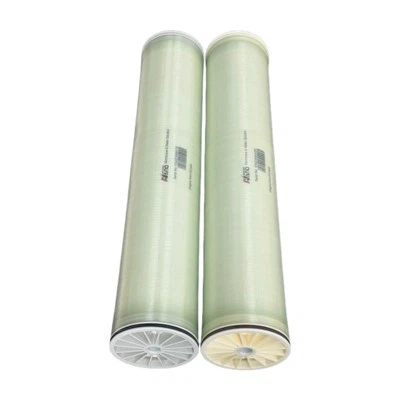
If you’re dealing with a thick, goopy fluid that’s giving your filtration team a headache, I’d love to help. We can set up a small test to run your actual fluid through a disc tube module, no strings attached. You’ll get real data on flow rate, fouling, and cleaning time, and you can see for yourself if this is the solution you’ve been looking for. Don’t let high viscosity derail your production anymore—reach out and let’s figure this out together.
Tubular Modules References:
- Membrane Filtration: Principles and Applications, 2nd Edition, John Wiley & Sons, 2019.
- Disc Tube Membrane Technology for Viscous Fluid Processing, Journal of Membrane Science and Technology, Vol. 10, No. 2, 2020, pp. 45-52.
- Industrial Separation Techniques for High Viscosity Fluids, Chemical Engineering Progress, Vol. 117, No. 5, 2021, pp. 32-38.
Hangzhou Nanoimp Environmental Technology Co., Ltd.
With abundant experience, we are one of the most professional disc tube membrane manufacturers and suppliers in China. Welcome to wholesale high quality disc tube membrane in stock here and get pricelist from our factory. We also accept customized orders.
Address: Road 25, Baiyang Street, Qiantang District, Hangzhou City, Zhejiang Province
E-mail: lena.hu@nano-sepmer.com
WebSite: https://www.nanoimp-membrane.com/
