If you’ve ever worked in solar energy, electric vehicle chargers, or off-grid power systems, you know how critical DC MCBs are for keeping circuits safe. As a supplier who’s been in this space for over a decade, the question I get asked most often isn’t just “Do you have DC MCBs?”—it’s “What’s the price of a DC MCB?” The truth is, there’s no one-size-fits-all answer. Pricing depends on a dozen factors, and skipping over those details can lead to unexpected costs, safety risks, or even wrong products for your project. Let me break this down like I would with any customer that walks into our warehouse or calls our sales line. DC MCB
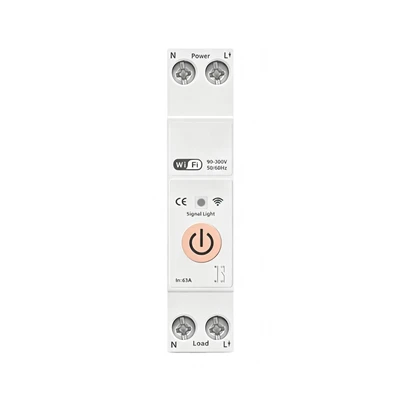
First, let’s make sure we’re on the same page about what a DC MCB is. Unlike AC circuit breakers, which handle alternating current, DC MCBs are built to manage direct current—think the power that flows from solar panels, batteries, or EV battery packs. They’re designed to prevent overloads and short circuits in systems where current flows in a single direction, which is way more sensitive to damage than AC current. A cheap, off-the-shelf AC breaker won’t cut it here—if you use one, you’re looking at a higher chance of arc flash, circuit burnout, or even fire. That’s why quality DC MCBs cost more upfront, and that extra cost is actually an investment in the safety and longevity of your entire power setup.
Now, let’s talk about the biggest driver of DC MCB pricing: current and voltage ratings. These aren’t just numbers—they’re tailored to your specific system. A small off-grid solar setup for a tiny cabin might only need a 10A, 500V DC MCB, which is on the lower end of the price spectrum. A commercial solar farm, though? That could use 100A or even 150A, 1000V DC MCBs, which cost two to three times more than the lower-rated models. I’ve had customers come in with a $20 budget for a DC breaker for a 60A battery bank, only to realize the correct part is closer to $50—and trying to save that $30 would mean a breaker that can’t handle the system’s current, leading to frequent trips or, worse, failure during a surge. It’s not just about picking any breaker; it’s about matching the rating to your system, and that specificity changes the price a lot.
Next, number of poles. DC MCBs come in 1-pole, 2-pole, and 4-pole versions. A 1-pole breaker is simple: it only disconnects one line, so it’s used for smaller, single-circuit systems like a small solar panel string. A 2-pole breaker disconnects two lines, which is common for 12V or 24V battery banks or split-phase DC systems. A 4-pole breaker, on the other hand, is used in larger, three-phase DC systems—think commercial solar arrays or EV fast chargers. Each extra pole adds to the cost, because more poles mean more internal components, tighter tolerances, and higher safety certifications. Last year, I had a customer who tried to use a 2-pole breaker for a 4-pole commercial inverter setup; not only did it fail safety tests, but it also cost them $1,200 in downtime to fix the mistake. The extra $10-15 for a 4-pole breaker would have saved them that headache.
Then there’s the certification and compliance piece. This is where you see a big gap between cheap no-name breakers and reputable ones. A DC MCB needs to pass strict safety tests from organizations like IEC (International Electrotechnical Commission), UL (Underwriters Laboratories), or TÜV. These certifications aren’t free—they require lab testing, ongoing quality checks, and manufacturing audits. No-name breakers that skip these tests might be 30-40% cheaper, but they often don’t handle DC current correctly, have a higher failure rate, and can’t be used in commercial projects or regions that require formal compliance. Last quarter, we had a customer install a non-certified DC MCB in a residential solar system; it arced during a charge cycle, burning out the inverter and costing them $3,000 in repairs. The certified breaker would have cost $80 instead of $50, but it would have prevented that entire loss. For commercial or industrial projects, compliance is non-negotiable, and that means accounting for certification costs in the price.
Brand and manufacturing quality also matter. We work with two core lines of DC MCBs: one for residential and small commercial projects, and a premium line for heavy industrial or large-scale solar. Our budget line is made with robust copper terminals, high-temperature-resistant plastics, and consistent tripping mechanisms—all of which are tested to last 10,000+ operations. The premium line uses advanced arc-quenching technology, corrosion-resistant parts for marine or harsh environments, and digital trip adjustments for precise system control. The difference in price between these two lines is about 25%, but the premium line has a failure rate of less than 0.1% vs. 1.2% for the budget line. For a project with 100 breakers, that’s a $500 difference upfront, but it’s also a $250 potential cost savings from fewer replacements and less downtime. As a supplier, we don’t push the premium line on every customer—if you’re working on a small residential setup, the budget line is more than enough—but it’s important to know that brand and build quality directly impact price and performance.
Where you buy the DC MCB also plays a role. I’ve seen customers buy from online marketplaces that sell “universal” DC breakers for half the price of what we offer. But here’s the catch: many of those listings are for AC breakers mislabeled as DC, or models that don’t match the stated rating. Last month, a customer told me they bought a 50A DC MCB from a global marketplace for $22, but when it arrived, it was a 30A AC breaker. We sell the correct 50A model for $45, which is double the marketplace price, but it’s the right part, tested, and covered by a 2-year warranty. If you’re buying from a reputable supplier like us, you’re paying for product accuracy, technical support, and a warranty—things that aren’t available from anonymous online sellers. For project managers who need to meet deadlines and stay on budget, that reliability is worth the extra cost.
Let’s also talk about volume discounts, which is where being a regular customer pays off. A lot of our one-off customers buy 1 or 2 breakers at list price, but contractors, installers, and large project teams who buy 50+ units get 10-20% off, and bulk orders (100+ units) can qualify for even more. Last year, a solar installer who does 10-15 residential systems a year started buying all their DC MCBs from us; they now get 18% off each breaker, which adds up to hundreds of dollars in savings each year. We also offer custom configurations for larger projects—like breakers with specific trip curves or pre-wired terminals—to match their system needs, which is something you can’t get from a mass-market seller. Volume doesn’t just lower the per-unit price; it also lets us streamline our production to meet your timeline, so you don’t have to wait weeks for stock.
Now, let’s put this all together into a rough price range to give you an idea. For a basic, 1-pole, 10-50A, 500V certified DC MCB: expect to pay $30-$60. For a 2-pole, 50-100A, 1000V certified model: $60-$120. For a 4-pole, 100-150A, 1000V premium model for industrial or large solar: $120-$200. These are rough numbers, and they can shift based on certifications, volume, and any custom features you need. I’ve seen a 2-pole 80A DC MCB sell for $70 for a residential project, and the same model sell for $110 for a commercial project because of extra compliance documentation required.
Here’s the biggest mistake I see customers make: focusing only on the upfront price instead of the total cost of ownership. A $30 cheap DC MCB might fail in 2 years, requiring a replacement cost plus downtime. A $50 high-quality certified MCB will last 10+ years, with no risk of system failure. For example, a small solar system with 2 breakers: $60 upfront for cheap models = $120, plus $100 in labor to replace them in 2 years = $220 total. $100 for certified models = $200 upfront, no replacements needed for 10 years = $200 total. In that case, the more expensive breaker is actually the cheaper long-term option.
As a DC MCB supplier, my job isn’t just to give you a price—it’s to help you pick the right breaker for your project at a fair cost. If you’re working on a tiny off-grid cabin, I’ll point you to our budget line that’s perfectly suited, no need to pay for premium features you don’t need. If you’re doing a commercial solar farm, I’ll explain why the certified premium model is necessary to meet local codes and prevent costly shutdowns. I also keep a large stock of all popular models, so you don’t have to wait weeks to get your breakers, which is a huge help for tight project timelines.

If you’re in the market for DC MCBs—whether it’s for a residential solar setup, EV charger, off-grid system, or industrial application—I’m here to help you get the right product at a price that fits your budget. We can walk through your system requirements, give you a customized quote, and answer any questions you have about ratings, certifications, or volume pricing. Don’t guess at what you need or risk safety with a cheap mislabeled breaker; reach out to our team to discuss your project details, and we’ll make sure you get exactly the right DC MCB at a fair cost.
T2 Surge Protective Device References:
- International Electrotechnical Commission (IEC). (2021). IEC 60947-2: Low-voltage switchgear and controlgear – Part 2: Circuit-breakers.
- Underwriters Laboratories (UL). (2022). UL 1077: Standard for Safety for Supplementary Protectors for Use in Electrical Equipment.
- National Electrical Manufacturers Association (NEMA). (2020). DC Circuit Protection for Renewable Energy Systems.
- Solar Power World. (2023). “DC Breaker Selection: Avoiding Common Costly Mistakes in Solar Installations.”
Zhejiang Leidun Electric Co., Ltd.
As one of the most experienced dc mcb manufacturers and suppliers in China, we also support customized service and OEM service. Please feel free to wholesale high quality dc mcb made in China here from our factory. Thank you for your interest in our products.
Address: No.337, Liule Road, Liushi Town, Yueqing City, Wenzhou City, Zhejiang Province, China
E-mail: Sales@zgleidun.com
WebSite: https://www.leidunelectric.com/
