If you’ve ever pulled up to a skid-mounted fuel station to refuel a fleet of delivery trucks, construction equipment, or farm machinery, you’ve probably noticed that the pumps don’t all spit fuel at the same speed. As someone who’s built, supplied, and serviced skid-mounted fuel stations for over a decade, I get more questions about flow rates than almost any other technical detail—especially from fleet managers, farm operators, and independent business owners who are weighing up whether a prefabricated skid unit will be efficient enough for their daily needs. A few years back, I had a client running a regional waste management fleet that ordered a skid station with the same pump size they’d used in their old above-ground tank, only to realize they were waiting 20 extra minutes every time they refueled their 30-truck fleet. That’s the kind of avoidable headache that comes from not getting flow rates right, and it’s exactly why I wanted to break down exactly what flow rates are available for skid-mounted fuel stations, how to pick the right one for your operation, and what factors actually change those numbers. Skid-mounted Fuel Station
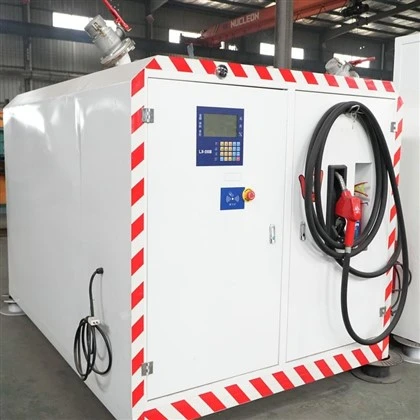
First, let’s get the basics straight: flow rate, in this context, is simply how much fuel (measured in gallons per minute, GPM, or liters per minute, LPM) a skid-mounted fuel station’s pump can push through a nozzle. It’s not just a random number manufacturers pull out of thin air—flow rate is tied to three core components of your skid unit: the pump’s power, the size of the fuel hose and nozzle, and the type of fuel you’re dispensing (diesel has a different viscosity than gasoline, which changes how fast it moves through the system). Most standard skid-mounted fuel stations we supply for light to medium operations have flow rates that fall into three clear categories, and it’s rare to find a unit that falls outside these ranges for standard on-road fuels.
The first, and most common, category is low-flow skid stations, which top out at 10 to 15 GPM (38 to 57 LPM). These are the units we recommend for small operations: single-truck fleets, small farm plots, or side businesses that only refuel a handful of pieces of equipment a day. A few years ago, a local garden supply company in my area ordered one of these low-flow units for their delivery trucks and lawn maintenance equipment, and they couldn’t have asked for a better fit. For context, refueling a standard half-ton pickup truck with a 25-gallon tank on a 15 GPM pump takes roughly 1 minute and 40 seconds—fast enough for a single truck, but if you tried to refuel three trucks back-to-back, you’d be looking at 5 minutes of wait time total, which isn’t a big deal for small teams. The tradeoff with low-flow units is that they’re smaller, cheaper, and easier to transport—perfect for operators who move their skid station between job sites or don’t have space for a larger, bulkier unit. That said, they’re not built for high-volume use, and pushing a lot of fuel through a low-flow pump too fast can cause unnecessary wear and tear on the motor over time.
Next up is medium-flow skid stations, which are the sweet spot for most mid-sized operations, with flow rates ranging from 15 to 30 GPM (57 to 114 LPM). This is the category my waste management client accidentally ordered outside of, and it’s where we see the most demand from construction companies with 10 to 20 pieces of equipment, delivery fleets with 10 to 30 vehicles, or small mining operations. Let’s do that same math again: a 25-gallon truck tank filled at 20 GPM takes 1 minute and 15 seconds, so three trucks in a row take under 4 minutes total. For a construction crew that’s refueling excavators, dump trucks, and water trucks, that kind of speed cuts down on downtime so much that most of our repeat clients in this segment never go back to a lower-flow unit. One reason medium-flow units are so popular is their versatility: they work with both gasoline and diesel, and many can be fitted with a second nozzle for off-road diesel or even non-petroleum fuels like biodiesel blends, which is a big plus for operators looking to lower their carbon footprint. The main thing to note here is that you still need to match the hose size to the flow rate—hoses for medium-flow units are typically ¾-inch in diameter, which is large enough to handle 30 GPM without causing pressure drops or strain on the pump.
The third, and largest, category is high-flow skid stations, which we build for high-volume operations with flow rates starting at 30 GPM and going all the way up to 60 GPM (227 LPM). These are the units for large fleets, major construction projects, or industrial operations where you might be refueling 50 or more pieces of equipment in a single shift. A good example here is a regional freight company that uses our 50 GPM high-flow skid stations for their long-haul tractor trailers. A semi-truck has a 100-gallon fuel tank, so filling that at 50 GPM takes just 2 minutes, compared to 6 minutes with a 15 GPM pump. For a fleet of 50 semis, that’s a difference of 200 minutes—over three and a half hours—per shift. That kind of time savings translates directly to less labor cost and more time on the road, which is why big players rely on high-flow skid units. These units use 1-inch hoses and heavy-duty, industrial-grade pumps that are built to handle constant, high-volume use without burning out. They’re also the most customizable: you can add multiple nozzles, integrate with fleet management software to track fuel usage, or even add filtration systems for heavy industrial fuels. The only downside is their size—high-flow skid units are bulkier, heavier, and more expensive, so they’re not worth the investment if you don’t have the volume to justify them.
Now, here’s the part that a lot of skid station suppliers won’t tell you: the flow rate listed on a unit’s spec sheet is often the maximum flow rate, which only applies under ideal conditions. A lot of things can lower that rate in real-world use, so it’s important to ask about these factors when you’re shopping. First, fuel viscosity: diesel is thicker than gasoline, so a pump that pushes 25 GPM for gasoline might only push 22 GPM for biodiesel or heavy-duty off-road diesel. Second, hose length: if you need a 50-foot hose instead of the standard 20-foot unit, that extra length creates friction that can drop flow rate by 2 to 5 GPM, depending on the hose size. Third, altitude: if you’re operating at high elevation, air pressure is lower, which can reduce pump performance by up to 10%. We always run these numbers for our clients before they order, so they don’t end up with a unit that’s slower than expected.
Another common question I get is whether you can upgrade the flow rate of a skid-mounted fuel station after you’ve bought it. The short answer is: usually not, or not cost-effectively. The pump, motor, hose size, and nozzle are all sized to work together to deliver a specific flow rate. If you tried to put a higher-flow nozzle on a low-flow unit, you’d just get fuel spurting out too fast, which is a safety hazard, and you’d put too much strain on the pump, leading to premature failure. In most cases, it’s better to order the right flow rate for your needs from the start, rather than try to upgrade later. I’ve seen too many clients waste money trying to tweak an undersized unit, when they could have just ordered the right one the first time.
Now, how do you pick the right flow rate for your operation? Let’s break it down with a simple framework. First, count how many pieces of equipment or vehicles you refuel in an average day, and add up their total tank sizes. If you refuel 2 or fewer vehicles a day, low-flow (10-15 GPM) is perfect. If you refuel 3 to 15, medium-flow (15-30 GPM) is your sweet spot. If you refuel 15 or more, especially large vehicles like semi-trucks or excavators, high-flow (30+ GPM) is the way to go. Also, think about future growth: if you plan to add more vehicles or expand your operation in the next few years, it’s almost always worth stepping up to the next flow category. I had a farm client a few years back who ordered a low-flow unit for their 5 tractors, then added 3 more the next year and ended up having to buy a whole new skid station six months later, instead of just getting a medium-flow unit upfront. That’s a costly mistake that’s easy to avoid with a little forward planning.
If you’re in the market for a skid-mounted fuel station and you’re still unsure which flow rate is right for you, or you want to learn more about our units and customization options, our team is here to help. We’ve supplied hundreds of skid stations across industries, from small family farms to large construction companies, and we can walk you through your specific needs, run calculations for your daily refueling volume, and help you find a unit that’s efficient, durable, and fits your budget. There’s no one-size-fits-all flow rate, but there is a perfect fit for every operation—you just need to work with someone who knows what they’re doing to find it.
Self-contained Fuel Station References:
- National Fire Protection Association. (2021). Standard for the Storage and Handling of Petroleum Products (NFPA 30). Quincy, MA: National Fire Protection Association.
- Petroleum Equipment Institute. (2022). Skid-Mounted Fuel Station Design and Performance Guidelines. Tulsa, OK: Petroleum Equipment Institute.
- U.S. Environmental Protection Agency. (2020). Alternative Fuel Infrastructure Guide: Dispenser Design and Performance. Washington, D.C.: U.S. Environmental Protection Agency.
- Construction Equipment Association. (2021). Fueling Efficiency for Medium and Heavy-Duty Mobile Equipment. St. Albans, UK: Construction Equipment Association.
Shandong Jingcai Industry and Trade Co., Ltd.
As one of the most professional skid-mounted fuel station manufacturers and suppliers in China, we also support customized service. With abundant experience, we warmly welcome you to wholesale high quality skid-mounted fuel station in stock here from our factory. Contact us for free sample.
Address: Caojiazhuang Village Industrial Park, Lingcheng Town, Qufu City, Jining City, Shandong Province.
E-mail: shandongjingcai888@gmail.com
WebSite: https://www.sdjingcaicn.com/
