If you’ve ever held a perfectly machined metal part—from a precision bolt in your car’s engine to a custom component in a medical device or even a prototype for a drone—you’ve almost certainly interacted with the output of CNC turning services. As a CNC turning services provider working in this space for more than a decade, I get asked this question all the time: Where did this technology come from? It’s not just a random invention; it’s a story rooted in decades of problem-solving, wartime urgency, and a relentless push to make manufacturing faster, more precise, and more adaptable than anything that came before. Let’s break down the origin of CNC turning, how it evolved into the service we offer today, and why it matters for every business that needs high-quality machined parts. CNC Turning Services
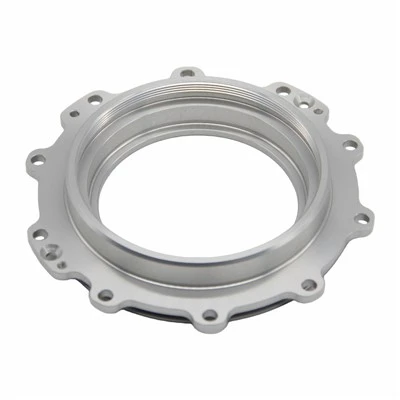
Before there was CNC turning, there was manual turning—one of the oldest machining processes in human history. For centuries, craftspeople used lathes powered by foot pedals, water wheels, or steam to shape wood, bone, and later metal. By the early 20th century, manual metal lathes were standard in factories and workshops. A machinist would stand at the machine, adjust cutting tools by hand, turn a handwheel to move the tool along the part, and rely on their eyes and experience to get measurements right. But as demand for precision parts grew, manual turning hit limits. A skilled machinist could only make so many parts in a day, and small errors from fatigue or human judgment were common.
The turning point—pun intended—for turning technology came during World War II. Military equipment like aircraft engines, artillery shells, and radar systems required parts that were not just strong, but accurate to within thousandths of an inch. Manual lathes couldn’t keep up with the volume or precision needed to supply the war effort. Engineers began experimenting with automated lathes, using cam mechanisms to control tool movement. Cam-operated lathes (often called screw machines, because they were first used to mass-produce screws) could repeat the same cut thousands of times with less variation, but they had a big flaw: each part design required a custom set of cams. Changing from making a screw to a valve component meant remaking the cams, which was slow and expensive for low-volume runs.
That’s where numerical control (NC) entered the picture. The core idea of NC—using a set of coded instructions to control machine tools—dates back to the 1940s, when a team at MIT’s Servomechanisms Lab, led by John Parsons, developed a system to automate aircraft part cutting. Parsons’ work was commissioned by the U.S. Air Force, which needed a way to make complex, precision airframe parts without the delays of manual setup. By the early 1950s, Parsons’ team had built a machine that used punched paper tapes to send instructions to a lathe, moving the cutting tool along X and Y axes automatically. This was a game-changer, but early NC systems were clunky: they were large, expensive, and required dedicated technicians to write and read the punch tapes. They also only worked for specific, high-volume aerospace jobs, not the small, varied runs common in other industries.
The shift from numerical control to computer numerical control (CNC) came in the 1960s, and it’s where turning services as we know them started to take shape. As computers got smaller, cheaper, and more powerful, engineers merged the NC punch tape system with a desktop computer. The first true CNC lathe was demonstrated in 1968 by the Cincinnati Milacron company, a name still familiar to many in manufacturing. This machine didn’t rely on punch tapes; it used simple programming code, and it could be reprogrammed in minutes to make a new part design, no custom cams needed. Suddenly, manufacturers could switch between a one-off prototype, a small batch of custom parts, and a large production run without reconfiguring the entire machine.
For small shops like mine, the adoption of CNC turning was a turning point in the 1980s and 1990s. Back then, only big aerospace and automotive companies could afford CNC machines—they cost more than a house, and programming them required specialized training. But as computer technology advanced and competition grew, CNC lathes became smaller, more user-friendly, and more affordable. By the early 2000s, a mid-sized shop could invest in a CNC turning center, hire a few machinists trained in basic programming, and start offering services to businesses that couldn’t justify their own in-house machines. That’s where our business fits: we specialize in making CNC turning accessible to small and medium-sized businesses, startups, and even hobbyists who need precision parts without the overhead of buying and maintaining their own equipment.
One common misconception about CNC turning is that it’s just “automated manual turning.” That’s not true. While the basic process—securing a cylindrical workpiece in a chuck, spinning it at high speed, and cutting away material to shape it—remains the same, CNC technology added layers of precision and flexibility that manual turning never had. A modern CNC turning center can hold a tolerance of 0.0005 inches, about the thickness of a human hair, and it can run 24 hours a day with little supervision. It can cut not just simple cylinders, but complex shapes like threads, tapers, and custom contours, all in a single setup. Compare that to a manual lathe, where cutting a thread might take an experienced machinist an hour, and the result would have to be checked multiple times. With CNC, that same thread is programmed once, and every part is identical.
Another key development in the evolution of CNC turning services was the rise of CAD/CAM software in the 1990s and 2000s. Before that, a machinist had to write CNC code by hand, a process that required deep knowledge of machine tools and coding. CAD (computer-aided design) lets engineers draw a part digitally, and CAM (computer-aided manufacturing) software translates that 3D design into the exact CNC code the lathe needs. Today, a designer can send us a 3D model of their part via email, and our team can program the CNC lathe in minutes, no manual coding required. That’s why turnaround times for CNC turned parts have shrunk from weeks in the 1980s to days—or even hours—today.
For our business, this history shapes how we operate. When customers come to us with a prototype or a small production run, they often don’t realize that the technology making their part is the product of 70 years of innovation. Early NC machines were built to solve a wartime problem of making precision parts fast; that same drive to solve problems is what guides us when we work with a startup that needs a custom drone component, or a medical device company that needs parts that meet strict FDA standards. We don’t just run lathes—we use a technology built on curiosity, urgency, and the desire to make manufacturing work for everyone, not just large corporations.
Of course, CNC turning hasn’t stopped evolving. In the last decade, we’ve seen the rise of multi-tasking turning centers, which combine turning with milling and drilling in a single machine, so a part can be fully machined without being moved between multiple tools. We’re also seeing the integration of IoT (Internet of Things) technology into CNC machines, which lets us monitor machine performance in real time, catch small issues before they cause delays, and even adjust cutting parameters automatically for better precision. For customers, that means faster delivery, fewer errors, and parts that meet even the most demanding specs.
But even with all this innovation, the core of CNC turning remains the same as the 1950s: taking a raw material—most often metal, like aluminum, stainless steel, or brass, but also plastics—and shaping it into a functional, precise part. That’s why businesses still turn to CNC turning services, instead of other methods like 3D printing or injection molding, for parts that need high strength, tight tolerances, and consistency at medium to high volumes. 3D printing is great for prototypes, but for a part that needs to hold up to thousands of operating hours, CNC turning is still the gold standard.
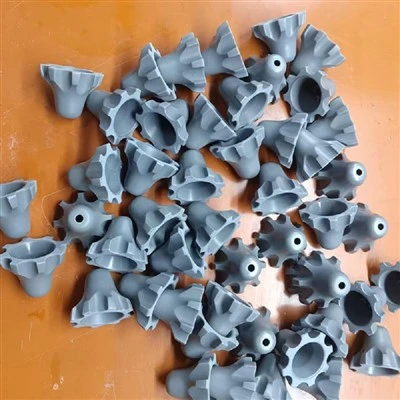
If you’re reading this and you have a project—whether it’s a custom part for a small machine, a prototype for a new product, or a production run for a medical device—chances are CNC turning can help. Our team has decades of experience working with materials from aluminum to titanium, and we can handle runs from 1 part to 10,000 parts with the same attention to precision. The history of CNC turning is about solving problems, and that’s exactly what we do for our customers. If you’re ready to discuss your part requirements, need a quote, or just have questions about what’s possible with CNC turning, don’t hesitate to connect with us. We’re here to turn your ideas into machined parts that work, built on the legacy of this remarkable technology.
5-Axis CNC Machining References
- Smith, M. (2018). The History of Machine Tools: From Manual Lathes to CNC. Manufacturing History Press.
- Parsons, J. (1974). Numerical Control: A Personal Account of Its Origins. MIT Press.
- Cincinnati Milacron. (1968). The First Commercial CNC Lathe: A Technical Breakthrough. Industry Archives.
- Lee, S. (2021). Evolution of CAD/CAM for CNC Machining. Journal of Modern Manufacturing Technology, 12(3), 45-62.
- National Association of Manufacturers. (2022). The Role of CNC Turning Services in Modern Manufacturing. Manufacturing Trends Report.
Shenzhen Multi-Wins Precision Technology Co., Ltd.
As one of the most professional CNC turning manufacturers and suppliers in China, we have world-leading production equipment and strong manufacturing capabilities. Please feel free to buy customized CNC turning made in China here from our factory. Also, quotation is available.
Address: 1 Phase, Yi’an City Central Garden, Longfei Avenue, Longgang District, Shenzhen, GD, China. 518100
E-mail: info@multi-wins.com
WebSite: https://www.multi-wins.com/
