If you’ve ever been behind the wheel and felt a strange clicking sound every time you turn the steering wheel—especially at low speeds—or noticed a shaky vibration that gets worse when you accelerate, odds are you’ve encountered a common yet often misunderstood mechanical issue: a failing constant-velocity (CV) joint. As a CV joint supplier with over a decade of working directly with auto repair shops, parts distributors, and even small-scale vehicle manufacturers, I’ve seen firsthand how a seemingly small component failure can spiral into major headaches for drivers, garages, and fleets alike. The worst part? Most people don’t realize how deeply a bad CV joint impacts drivability—until they’re stranded on a busy highway or stuck in a parking lot with a car that won’t turn properly. Let’s break down exactly what happens when a CV joint fails, how it changes the way your vehicle drives, and why this isn’t a problem you can afford to ignore. Cv Joint

First, let’s start with the basics for anyone who’s not a gearhead. CV joints are the unsung heroes of front-wheel-drive (FWD), all-wheel-drive (AWD), and even many rear-wheel-drive (RWD) performance vehicles, though they’re most critical in FWD models. Their job is simple on paper: transfer power from the transmission to the drive wheels while accommodating the constant up-and-down movement of the suspension as you drive over bumps, turn corners, and adjust your speed. Unlike universal joints (U-joints), which are used in RWD driveshafts and have limited angle tolerance, CV joints flex smoothly at much steeper angles—this is why your front wheels can turn so far for parking, and your suspension can compress without killing power flow. Each drive axle has two CV joints: an outer joint near the wheel hub, which handles turning angles, and an inner joint near the transmission, which moves with the suspension as the wheel bounces. Both are protected by a rubber or plastic boot, called a CV boot, that’s packed with high-quality grease to keep contaminants like dirt, water, and road debris out. Here’s the thing: 90% of CV joint failures start with a damaged CV boot. A tiny tear, crack, or hole in that boot lets grease leak out over time, and once the grease is gone, the metal CV joint components—ball bearings, raceways, and a cage that holds them in place—rub together dry. That’s when the damage starts, and the impact on drivability begins to show.
The first sign of a failing CV joint that most drivers notice is that clicking or popping noise when turning, usually at low speeds (under 25 mph). At first, it might only happen when you turn all the way to the left or right, like when pulling into a driveway or parallel parking. You might brush it off as a loose bracket or a minor road noise, but that clicking is the CV joint’s ball bearings grinding against a damaged raceway as it flexes at steep angles. I remember a customer who brought in a 2018 Honda Civic a few years back, complaining of “a weird clicking when turning left” that only started after he hit a pothole. When we inspected it, his outer left CV boot had a half-inch tear from the pothole impact, and the joint was already half its grease gone. By the time he noticed the noise, the ball bearings had started to pit the raceway, and the clicking was a clear sign the joint was failing. What he didn’t realize was that this noise wasn’t just an annoyance—it was his vehicle’s drivability warning him that it was losing power transfer efficiency. As the joint’s internal components wear, it can’t transmit torque as smoothly, so when you accelerate through a turn, the clicking gets louder, and you might even feel a slight jerk in the steering wheel. For a daily commuter, that’s frustrating, but for a delivery van making 100 turns a day, that jerk adds up to more wear and tear on other parts, like the transmission and axle housing.
Next, that clicking often leads to vibration—something that’s hard to miss at highway speeds. As the CV joint’s internal parts become damaged and misaligned, they can’t rotate smoothly, which creates a rhythmic vibration that gets worse as your speed increases. If the damage is in an outer CV joint, the vibration is usually most noticeable when you’re accelerating and turning at the same time; if it’s an inner joint, the vibration might show up when you’re going straight and accelerating hard. I once worked with a fleet manager for a local parcel delivery company who had three vans with CV joint failures all in the same week. The vans were used for stop-and-go city driving, and their CV boots were exposed to constant road salt, water, and debris in the winter. The vibrations were so bad that drivers were complaining their coffee was sloshing out of cups, and some even said the steering wheel shook so much it made their hands sore after a 40-minute route. What’s more, these vibrations put extra stress on other drivetrain components: the driveshaft, transmission mounts, and even the wheel bearings. Replacing a CV joint is a fraction of the cost of replacing a damaged transmission or wheel bearing, but many drivers ignore the vibration, thinking it’s just a tire balance issue. That’s a dangerous mistake.
As the CV joint failure progresses, the drivability issues get much more serious. Eventually, the damaged joint can lose the ability to transfer power at all, which means you’ll lose power to one of your drive wheels. In a FWD vehicle, that means one front wheel might stop pulling, so when you accelerate from a stop, the vehicle will pull sharply to one side. Try that at an intersection and you could be headed toward another lane or a curb. In an AWD vehicle, failing CV joints can disrupt the power balance between the front and rear axles, leading to a loss of traction—especially on wet or icy roads. I remember a customer with a Subaru Outback who got stuck in a light snowstorm because his rear CV joint had failed. He’d noticed a slight vibration for a week, but he was busy with work and put off getting it checked. When he tried to pull out of his driveway, only the front wheels had power, and the AWD system couldn’t compensate, so he spun the front tires and got stuck. We had to tow him to the shop, and by the time we replaced the CV joint, he also had to replace a couple of worn wheel hubs that had been damaged by the uneven power flow. The total repair bill was three times what it would have been if he’d fixed the joint when the vibration first started.
The worst-case scenario for a CV joint failure is complete joint separation, which can happen if you ignore the problem long enough. When the CV joint’s ball bearings or raceways are completely worn, the joint can break apart while you’re driving, usually at high speeds or during a hard turn. That means you’ll lose all power to that drive wheel, and your vehicle will suddenly pull hard to one side—this is extremely dangerous at highway speeds, where even a small pull can cause a crash. I’ve heard horror stories from repair techs about drivers who were going 60 mph on the highway when a CV joint failed, sending their car swerving into the adjacent lane. The good news is that complete separation is rare if you catch CV joint failure early, but it’s far from impossible—especially in older vehicles or those that see heavy use without regular maintenance.
Now, let’s talk about how as a CV joint supplier, we see these issues play out in real-world applications. We’ve spent years engineering CV joints with high-quality alloy steel boots that resist tears from potholes and road debris, and we pack each joint with lithium-complex grease that stays intact in extreme temperatures—both critical features to prevent early failure. But even the best CV joint won’t last forever, and knowing how to spot early signs of failure can save drivers a lot of trouble. The key is to do regular checks: every time you get an oil change, ask your tech to inspect the CV boots for cracks or tears. If you hear clicking when turning, feel vibration when accelerating, or notice your vehicle pulling to one side when driving, don’t put it off. Replacing a failed CV joint promptly won’t just restore smooth drivability—it will also prevent damage to other parts of your vehicle.
You might be wondering, “Is a failing CV joint dangerous, or just an inconvenience?” The answer is that it’s both—an inconvenience that can quickly become dangerous. Drivability issues from a bad CV joint aren’t just about comfort; they’re about control. When your vehicle can’t transfer power smoothly, when it pulls sharply during acceleration, or when you lose traction on a wet road, your ability to react to unexpected hazards is reduced. For fleets, the impact is even more significant: downtime from vehicle breakdowns costs thousands of dollars per day, and the risk of accidents can lead to insurance premium increases or even liability issues. That’s why we work closely with auto repair shops to supply high-quality CV joints that are built to last, because we know that a reliable drivetrain is what keeps drivers safe and businesses running.
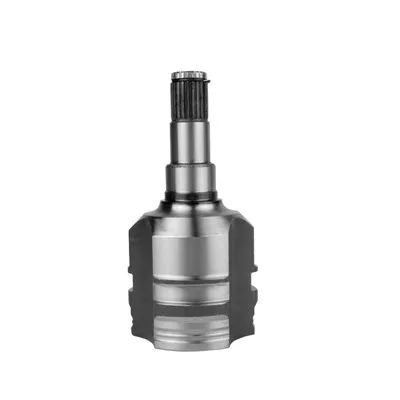
If you’re a repair shop owner in need of consistent, high-quality CV joint parts, a fleet manager looking to reduce downtime, or a parts distributor wanting to stock reliable components that your customers can trust, we’re here to help. Our team has years of experience working with the auto industry, and we offer a range of CV joints for all makes and models, from passenger cars to heavy-duty trucks. We prioritize quality control in every step of production to ensure each joint meets or exceeds industry standards, so you can deliver reliable repairs to your customers every time. If you’d like to learn more about our CV joint products, discuss bulk pricing for fleets or distributors, or ask questions about CV joint maintenance and installation, please get in touch with our team. We’re ready to help you find the right solution for your needs.
Coil Spring References
- Automotive Parts Rebuilders Association. (2021). Constant Velocity Joint Performance and Failure Analysis. APRA Technical Bulletin.
- National Highway Traffic Safety Administration. (2019). Drivetrain Component Failure and Vehicle Control: Crash Data Analysis. NHTSA Technical Report DOT HS 812 745.
- SAE International. (2020). Engineering Standards for Constant Velocity Joints in Passenger and Commercial Vehicles. SAE J2501.
- Automotive Service Association. (2022). Preventive Maintenance Guidelines for Drivetrain Components. ASA Maintenance Best Practices Report.
Guangzhou Pinxiu Auto Parts Co., Ltd.
As one of the most professional cv joint manufacturers and suppliers in China, we warmly welcome you to buy durable cv joint for sale here from our factory. All customized products are with high quality and competitive price. Contact us for pricelist.
Address:
E-mail: pinxiu@cclparts.com
WebSite: https://www.cclauto-parts.com/
