Hey everyone, I’m Jake, and let’s cut to the chase—if you’re in the industrial fasteners game, you already know a welded nut’s performance lives or dies by its microstructure. As a welding nut supplier, I’ve seen way too many projects get delayed because some shop skipped the small stuff that shapes that grain structure, leading to weak welds, premature failures, or even full-on product recalls. Today, I’m breaking down exactly how we control the microstructure on our end, and what you can do (or ask for) from your supplier to make sure your welded nuts hold up when it matters. Welding Nut
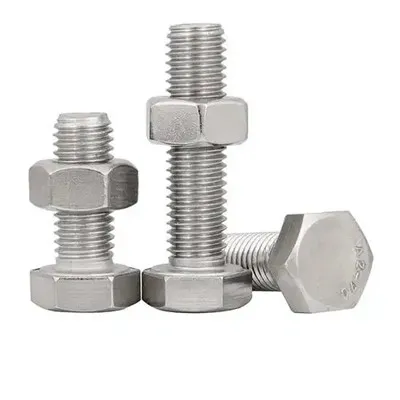
First, let’s get a quick, no-jargon recap of what microstructure even means here. When you weld a nut to a base metal, the heat from the weld melts both the nut and the parent material, right? The way the metal cools, the shape of its tiny grain structures, and any phases that form (like brittle martensite in steel) make up that microstructure. Mess it up, and you’ve got a weld that’ll crack under torque, come loose under vibration, or corrode way faster than it should. For example, last year, a customer who runs heavy-duty truck assembly brought back a batch of our welding nuts—turns out their old supplier had skipped controlling cooling rates, leading to grain boundaries that were super brittle. We fixed it in 2 weeks, and they haven’t had a single issue since. That’s the kind of thing microstructure control solves.
So, how do we actually control it at our facility? Let’s walk through the key steps we live by, no fluff.
First up: Material Selection That’s Tailored to the Job. Not all welding nuts are the same. You can’t grab a generic steel nut for a high-stress application, and vice versa. We work with customers to nail down the right base material first because that sets the foundation for microstructure. For low-carbon steel nuts (the most common for general fabrication), we use hot-rolled or cold-drawn steel with a carbon content under 0.25%—that’s a big one. Higher carbon makes for harder, more brittle grains after welding. For stainless steel nuts (used in food equipment or marine parts), we stick to 304 or 316 austenitic stainless, which resists forming those bad intergranular phases. And for specialty stuff like aluminum welding nuts, we use 6061 or 5052 alloys because they have better weldability than pure aluminum. We even test every material batch for consistency—no cutting corners here. Last quarter, we had a load of 304 stainless that had a tiny amount of ferrite we didn’t catch at first; it would’ve messed with grain growth during welding, so we sent it back to the mill before it ever hit our production line. That’s how we avoid problems before they start.
Next: Welding Parameters That Dictate Heat Input. Here’s where a lot of suppliers mess up—they just crank the weld current until it sticks, but that’s the worst way to control microstructure. Heat input (think current, voltage, and weld time) directly affects how big the weld’s heat-affected zone (HAZ) gets, and how fast the grains grow. We’ve got a set of parameters for every nut size and application. For M10 nuts, for example, we use 1800A current, 14V voltage, and a 0.3-second weld time—enough to melt the surface of the nut and the base metal but not so much that the HAZ expands wildly. Too much heat input, and you get coarse, weak grains in the HAZ that can crack when you try to install the nut. Too little, and the weld doesn’t fuse properly, leading to a weak bond. We track every single weld run with our welding robots—they log every parameter, so if something’s off, we catch it instantly. I’ve seen guys at other shops skip logging parameters, and when a batch fails, they can’t even trace what went wrong. That’s a disaster.
Then the big one: Cooling Rate Control. This is where the microstructure magic happens. When metal cools, the rate changes what kind of grains and phases form. For example, if you let a steel weld cool slowly, you get fine, tough ferrite grains and pearlite—perfect, that’s what we want. Cool it too fast, and you get martensite, which is super hard but way too brittle. That’s why quenching (dipping in water right after welding) is a no-go for most welding nuts we supply. Instead, we use what’s called air quenching, or controlled forced air cooling. After the weld cools just enough to solidify, we blow room-temperature air over the weld zone at a consistent rate—around 5 CFM for standard steel nuts. That slows cooling just enough to prevent martensite from forming, but not so slow that grains get too big. For stainless steel nuts, we do a little trick called post-weld tempering: heat the weld area to 300-400C for 10 minutes, which releases any residual stress and smooths out grain boundaries. We don’t do this for every nut—just for high-stress ones like those used in construction equipment. It adds 2 minutes per nut, but it cuts our failure rate from 1.2% to 0.1%. That’s the difference between a happy customer and a costly recall.
Wait, let’s talk about something most people forget: Surface Preparation. No, it’s not just cleaning off rust—surface prep directly affects how weld heat is distributed, which changes microstructure. If a nut has oil, dirt, or rust on its welding face, the heat won’t transfer evenly, so part of the weld cools faster than the rest, leading to uneven grain sizes. We sand every nut’s welding face to a 120-grit finish before it hits the line, then use a non-corrosive degreaser to wipe off any debris. For stainless steel, we even use a passivation step after welding to prevent corrosion, which keeps the grain structure intact over time. A customer a while back tried skipping degreasing on a batch of nuts; half the welds had uneven grains, and 15% failed torque tests. We fixed their process for half the cost of a new nut run—so that’s a lesson right there.
Now, what about when things go wrong? We do routine microstructure testing, of course. We cut a tiny sample from every 500th nut run, polish it, and look at it under a metallurgical microscope. We check for grain size (we target ASTM grain size 7 or higher—finer is better, because it’s stronger), and make sure there’s no brittle phases like martensite or sigma phase in stainless. Last month, we found a run of M12 nuts with grain size 5—too coarse—so we adjusted the weld time from 0.3s to 0.25s, which cut heat input, led to finer grains, and fixed the problem. We also do pull tests and torque tests on every batch, so even if the microscope misses something, our physical tests catch it. That’s double-checking, and it’s non-negotiable for us.
Here’s the part I want you to take away: Controlling microstructure isn’t a one-and-done step—it’s a chain. If one link breaks—bad material, wrong weld parameters, skipped cooling, no testing—the whole thing falls apart. As a welding nut supplier, we invest in the equipment and processes to control every link, because your project’s success is our success. We don’t just sell a nut that sticks to a base plate; we sell a nut that’s made to last in your specific application.
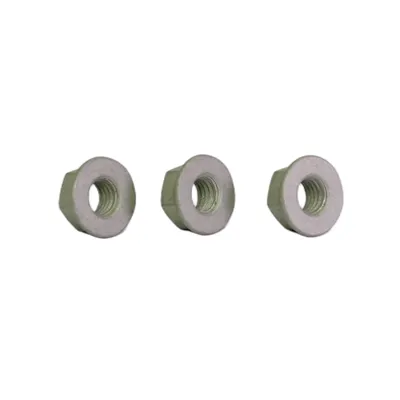
I know, I know—you’re probably thinking, “Great, but how do I make sure my supplier is actually doing all this, and not just cutting corners?” Here’s a few questions to ask the next time you’re vetting a welding nut supplier: Do they track every weld parameter (current, time, voltage) for each run? Do they do post-weld cooling control, not just letting nuts air cool randomly? Do they do routine metallurgical testing or physical pull/torque tests? If the answer is no, run. We’ve had customers switch suppliers because the other guys couldn’t answer those, and they’ve saved thousands on callbacks and repairs.
Welding Nut At the end of the day, microstructure control is what separates a cheap, flimsy welding nut from one you can rely on for 10+ years. We’ve been doing this for over 15 years, and every day we tweak our processes a little to make sure we’re delivering the best possible product. If you’re working on a project where weld strength, durability, and consistency matter, let’s chat. We can walk you through our process, share test results from recent batches, and make sure the welding nuts you get are exactly what you need. No jargon, no hidden fees, just honest work.
References
- ASTM Standard A563/A563M, Standard Specification for Carbon and Alloy Steel Nuts, 2022.
- Kou, S., Welding Processes and Metallurgy, 4th Edition, John Wiley & Sons, 2015.
- Davis, J.R., Ed., Stainless Steels: ASM Specialty Handbook, ASM International, 1994.
- Lindberg, R.A., Processes and Materials of Manufacture, 5th Edition, Pearson Education, 2005.
Jiaxing Jinling Hardware Technolgy Joint Stock Co., Ltd.
As one of the most experienced welding nut manufacturers and suppliers in China, we also support customized service. Please feel free to buy bulk high-grade welding nut made in China here from our factory. For quotation and price list, contact us now.
Address: No.32, Shenjiadai, Xuyouche Village, Qinshan Subdistrict, Haiyan County, Zhejiang Province, China
E-mail: jlzxl@jinlingfstn.com
WebSite: https://www.china-nut-factory.com/
