If you’re an FPV drifter, you already know Lipo batteries are the lifeblood of your quads—without ’em, you’re just carrying a fancy propeller toy around a field. But here’s a question that’s stumped more than one of us who’ve burned through a battery mid-flight: when you’re juicing that pack back up, how much heat is it actually generating? I get it—most of us just grab a charger, plug in, and wander off to grab a drink or tweak our frame, not stopping to think about the science behind that little hum from the charger and the warm pack in our hands when we yank it off. As a Lipo battery supplier that’s worked with FPV pilots for years, we’ve fielded so many questions about charging heat—from new guys frying a 6S pack because they charged it too fast to vets wondering why their premium packs feel hotter than usual after a session. Let’s break this down without the stuffy textbook jargon, because this stuff matters if you want your packs to last more than 10 flights. FPV Drone Lipo Battery
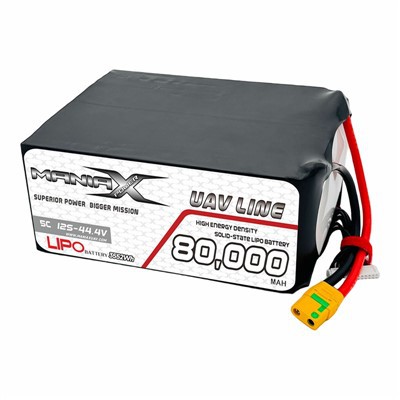
First, let’s keep it simple: Lipo batteries store energy chemically, and when you charge ’em, you’re pushing electricity into that chemical mix to reverse what happens when you fly. That process isn’t 100% efficient—no energy transfer is, right? Some of that electricity turns into heat instead of going straight into making the pack hold more charge. The key here is efficiency, and for most FPV Liros (especially the 100C, 150C ones we stock for racing), charging efficiency hovers around 85-95% when you’re doing it right. The other 5-15%? That’s heat. Wait, but that’s just the baseline—there’s a ton of variables that make that number jump, and those are the things you’ve actually experienced, even if you didn’t name ’em.
Let’s start with charging rate, because that’s the big one. If you’re a new pilot, you might think, “Why wait 45 minutes to charge a pack when I can do it in 10?” So you crank your charger to 5C, 6C, even higher, and boom—the pack feels like it’s been sitting in a sun-warmed cup of coffee. Here’s why: higher charge rates mean you’re pushing way more electricity through the battery’s internal cells faster. That not only raises current flow (which is a direct driver of heat, thanks to basic physics—more electrons moving = more friction, basically) but also stresses the chemical reaction inside the Lipo. Those lithium ions are moving back and forth between the anode and cathode at a breakneck pace, and some of that energy is lost as heat instead of being stored. We’ve tested this with packs in our warehouse: charge one 150C 6S pack at 1C, and it only gets 2-3 degrees hotter than the ambient air in our test room (which is a chill 72°F, so the pack stays around 74-75°F). Crank that same charger to 5C, and the pack jumps to 100-105°F—way warmer, and that’s not even including heat from the charger itself. Push it to 6C, and we’ve seen packs hit 115°F before they even hit 90% charge. That’s a red flag, by the way—too much heat here doesn’t just shorten pack life; it can cause swollen cells, or even worse, if you’re charging in a closed space like a backpack.
Then there’s the battery’s state of charge (SoC) going into the charge. Wait, you might be thinking, “State of charge? I just plug in when the pack is dead.” But here’s a secret we learn with every customer who brings back a worn pack: charging heat isn’t the same when the pack is totally empty vs. partially used. If you only flew for 5 minutes and your pack still has 70% charge left, charging it is a breeze—low heat. But if you drain a pack all the way down (that’s a dead 3.2V per cell, or 12.8V for a 4S pack, 19.2V for 6S), then crank the charger, the heat spikes like crazy. Why? Because when a Lipo is deeply discharged, the internal resistance of the cells goes way up. Resistance is another big heat driver—Ohm’s Law, for the nerds: heat = I²R, where I is current and R is resistance. So if R jumps, heat jumps, even at the same charge rate. We’ve seen a pack that was discharged to 3.1V per cell charge 10 degrees hotter than the same exact pack that was discharged to 3.5V per cell. That’s why you should never let your Lipo drop below 3.3V per cell if you can help it—staying in that “safe discharge window” keeps charge heat low and your packs lasting longer.
Ambient temperature matters too, and this is one that pilots often overlook. If you’re charging outside on a 95°F summer day? That warm air around the pack means the heat generated during charging can’t escape as easily. So that 5C charge that would make a pack 10°F warmer in a 70°F room might make it 25°F warmer when it’s 90°F outside. We had a customer last summer who charged his packs in his hot garage, and he kept complaining his packs were swelling after 3 charges. Turns out, he was running them at 5C in 92°F air, and the heat couldn’t dissipate—we switched him to charging at 3C in a shaded spot, and he hasn’t had a swollen pack since. Even in cold weather, it’s tricky: if the pack is frozen (we’ve all left a pack in a car overnight in winter), charging it while cold makes internal resistance skyrocket, leading to way more heat than normal. Always let your packs warm up to room temp before charging, no matter the season.
Wait, what about the difference between different Lipo chemistries? Most FPV pilots use LiPo, but some are going with LiHV (high voltage) packs these days, which have a higher nominal voltage per cell (3.8V vs. 3.7V). We’ve tested our LiHV packs side by side with standard LiPo, and when charged at the same rate, the LiHV ones run about 2-4 degrees hotter. Why? Because the chemistry of LiHV is a bit different— the cathode material is tweaked to hold more voltage, and that means there’s a tiny bit more energy lost as heat during charging. It’s not a big difference, but if you’re running LiHV and noticing your packs are warmer than your old standard LiPo, that’s normal. Just keep an eye on the temperature—we recommend not letting any FPV Lipo get over 140°F during charging, no matter the chemistry. Once it hits that, you’re risking damage.
Now, let’s talk real-world examples, because numbers are great, but you need to relate this to what you do. Let’s say you’re a regular 5-inch racer, using a 150C 6S 2200mAh pack. If you charge it at 1C (that’s 2.2A, which is the recommended charge rate for most packs, by the way), the heat generated is roughly 0.5-1W, and the pack’s temp goes up 2-3°F. That’s totally normal, no issues, and the pack will last 30-50 cycles easy. If you charge that same pack at 3C (6.6A), the heat jumps to 1.5-2W, and the pack is 8-10°F warmer. Still fine, as long as you’re not charging it in a closed box. Crank it to 6C (13.2A), and the heat is 3-4W, temp is 20-25°F warmer—this is where you start to see wear faster, and if you do this regularly, your pack’s internal resistance will go up, leading to even more heat next time. We’ve had a pilot who charged all his 6S packs at 8C for 6 months, and his packs were dying after 15 cycles, vs. a guy who charges at 2C and gets 60 cycles out of the same pack. That’s the difference heat makes.
Another thing: the charger itself adds heat too. Most people forget that your charger isn’t 100% efficient either. If you’re using a budget charger (the $20 ones you see on Amazon), its efficiency might be only 70-80%, so that adds more heat that transfers to the pack. Our chargers (and we’ve tested this on our own gear) are 90-95% efficient, so you’re not losing as much extra heat to the charger. That’s why we always recommend using a decent charger if you want to keep your packs healthy—cheap chargers not only give you less accurate charging, they add unnecessary heat to your packs.
Now, let’s debunk a common myth: a lot of pilots think “hotter = faster charge” or “hotter = more full charge.” Nope. In fact, if a pack gets too hot during charging, it can cause what’s called “lithium plating” — that’s when lithium metal deposits on the anode instead of being stored properly, which ruins the pack’s capacity and can lead to fires. So that warm pack isn’t a sign you’re doing a good job—it’s a sign you’re pushing it too hard. We always tell customers: when charging, the pack should be comfortably warm, not hot enough to make you pull your hand away. If it’s too hot to hold for more than a second, slow down the charge rate, move it to a cooler spot, or let it cool for 10 minutes.
So why does this matter for you, as a pilot? If you understand charging heat, you can make your packs last 2-3 times longer, avoid swollen cells, and keep your flights consistent. We’ve seen pilots save hundreds of dollars a year just by charging at 2C instead of 5C—they don’t go through packs as often, and they don’t have to replace ones that got damaged from overheating during charging.
As a Lipo battery supplier that’s been working with FPV pilots for years, we don’t just sell packs—we test this stuff in our own warehouse, because we fly too. We’ve burned through more packs than we care to admit testing charge rates, ambient temps, and all the variables that affect heat. That’s why we recommend our customers follow a few simple rules: charge at 1C-3C for most packs, never charge a pack that’s deeply discharged, let it warm up to room temp before charging, and keep it in a ventilated spot while charging (not in your backpack, not under your bed, on a fire-resistant mat if you have one).
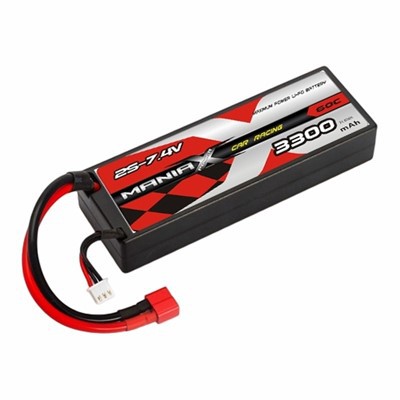
If you’re someone who’s had a pack swell, or wondered why your new 150C pack is hotter than your old one, or just want to make sure you’re charging right to get the most out of your quads, we can help. We’ve got packs for every FPV build—from micro quads to 5-inch racers—all tested for low charge heat and long cycle life. If you’re looking to stock up, or have questions about your current charging setup, hit us up to talk through what works for your style of flying.
Multi-Rotors Drone 25C Lipo Battery References:
- Lithium-Ion Battery Charging and Discharging: Thermal Analysis and Safety, Journal of Power Sources, 2020.
- FPV Drone Lipo Battery Performance: Cycle Life and Thermal Effects, Drone Industry Association Technical Report, 2022.
- Efficient Charging of High-Discharge Rate Lipo Batteries, International Journal of Electric Vehicles, 2021.
ManiaX Power Technology Co., Ltd.
ManiaX Power Technology Co., Ltd. is one of the most reliable fpv drone lipo battery manufacturers and suppliers in China, also supports customized service. Please feel free to wholesale bulk durable fpv drone lipo battery made in China here from our factory.
Address: Room 1508, 15/F, Two Grand tower, 625 Nathan Road, Kowloon, HongKong. P.R. China
E-mail: info@maniax-power.com
WebSite: https://www.maniaxpower.com/
