If you’re a wheat farmer, you already know how critical it is to keep your fields free of weeds that compete for water, nutrients, and sunlight. At [Your Company Name], we get questions every day from growers asking if imazapic—one of our most reliable herbicides for grass and broadleaf weed control—can safely be used on wheat fields. It’s a fair question, because choosing the right herbicide means balancing effective weed management with crop safety, and that’s a balance we spend years perfecting for our customers. Imazapic

Let’s start with the basics: imazapic is an acetohydroxyacid synthase (AHAS) inhibitor, part of the imidazolinone family of herbicides. It works by blocking an enzyme essential for plant growth, stopping weeds from sprouting or developing before they can threaten your crop. But AHAS inhibitors aren’t one-size-fits-all, and that’s why so many wheat growers wonder specifically about imazapic for their fields.
The short answer is: yes, imazapic can be used on wheat fields, but only under specific conditions that are non-negotiable for both weed control results and crop health. The key here is a category of wheat called “Imidazolinone-resistant (IR) wheat” — a strain genetically modified to tolerate imazapic, developed to let growers use this herbicide to target weeds without harming the crop itself. For non-IR wheat, imazapic is a hard no. It will cause stunted growth, yellowing foliage, reduced tillering, and in severe cases, total crop loss. That’s a line we never cross as a supplier, and we make that clear to every grower before they even consider our product.
Now, let’s break down when and how to apply imazapic to IR wheat, because even with resistant wheat, timing and application method matter a lot. The ideal window is either pre-plant before the wheat seeds go into the soil, or pre-emergence right after the wheat has sprouted but before weeds start to germinate. This timing is critical because imazapic has a long residual activity in soil — it can stay active for 12 to 18 months, depending on soil type, pH, and rainfall. If you apply it too late, when weeds are already growing, you risk the herbicide breaking down too slowly to target the weeds, or leaving residual levels high enough to harm any rotational crops you plant after wheat. We always advise growers to test their soil pH before applying; imazapic works best in soils with a pH between 5.5 and 7.0. In alkaline soils (pH above 7.5), the herbicide binds more tightly to soil particles, reducing its effectiveness, while in overly acidic soils, it can leach into groundwater or remain active too long for safe rotations.
We also get a lot of questions about how imazapic stacks up against other common wheat herbicides. Glyphosate, for example, is widely used, but many weed species have developed resistance to it, including some of the most problematic weeds in wheat fields: rigid ryegrass, blackgrass, and downy brome. Imazapic targets these resistant weed populations because it works on a different enzyme pathway, so it’s a valuable tool in resistance management. That’s why so many growers in regions with a history of herbicide resistance turn to imazapic from our company — we source our product from reputable manufacturers and ensure it meets strict purity standards, so you can rely on consistent results without adding unnecessary contaminants to your soil.
But it’s not all perfect. There are significant limitations to using imazapic on wheat fields, and we never sugarcoat those for our customers. First, as I mentioned earlier, it only works on IR wheat. If you grow conventional wheat, imazapic will damage it, and even some newer IR wheat varieties can have varying levels of tolerance depending on their genetic background. That’s why we always recommend growers check with their seed supplier to confirm their wheat is indeed IR before applying imazapic. Second, residual activity is a double-edged sword. If you plan to plant rotational crops after wheat, like corn, soybeans, or other broadleaf crops, imazapic’s leftovers can harm those plants. For example, imazapic can persist in soil long enough to cause injury to soybeans planted the year after wheat, unless you use a herbicide safener or wait a full growing season after application. That’s a detail we include in every product label we provide to our customers, because mismanaging residual activity is one of the most common mistakes growers make with imazapic.
Another limitation is weed species efficacy. Imazapic is great at controlling grasses like barnyardgrass, foxtail, and blackgrass, as well as broadleaf weeds like pigweed and lambsquarters, but it’s less effective on tough weeds like Canada thistle or bindweed. For those, you’d need a follow-up application or a tank mix with another herbicide, and we work with growers to customize their herbicide programs so they don’t overapply or use incompatible products. We also caution against applying imazapic during periods of drought or extreme heat. When wheat is under stress, even IR strains can be more susceptible to herbicide damage, so timing applications when soil moisture is moderate and temperatures are below 85°F is always best.
As a supplier, our job isn’t just to sell imazapic — it’s to help growers use it safely and effectively. That’s why we’ve spent decades building relationships with wheat farmers, agronomists, and researchers to understand the unique challenges of different wheat-growing regions. For example, in the Great Plains of the United States, where blackgrass and rigid ryegrass are rampant, imazapic is a cornerstone of weed management programs, but growers there often use it in combination with pre-emergent herbicides like sulfentrazone to broaden their weed control spectrum and reduce resistance risk. In the Pacific Northwest, where soil pH is often higher, we adjust application rates slightly to account for the way imazapic binds to those alkaline soils, ensuring it still works without leaving harmful residues.
We also prioritize sustainability in how we approach imazapic use. Many growers are concerned about the environmental impact of herbicides, and we share that concern. That’s why our product is formulated to break down efficiently in target conditions, and we provide clear guidelines for application rates to minimize runoff. We also educate customers on resistance management best practices: rotating herbicide modes of action, mixing with different herbicides when needed, and avoiding over-reliance on imazapic alone. For example, if you use imazapic for two consecutive growing seasons, you’re more likely to develop weeds resistant to it. We recommend using it once every two to three seasons, paired with cultural practices like crop rotation and tillage, to keep weed populations in check long-term.
Wait, let’s address a common misconception: some growers think imazapic is too expensive to use on wheat, but when you factor in the cost of yield loss from unmanaged weeds, it’s actually a cost-effective investment. Studies from the University of Nebraska-Lincoln show that unmanaged weeds in wheat fields can reduce yields by 20 to 40%, and in severe cases, even more. Imazapic application typically costs between $15 and $25 per acre, but the yield gain from controlling weeds often translates to a return on investment of 3 to 5 times that cost. That’s why so many large-scale wheat operations rely on imazapic as a core part of their weed management strategy — it’s not just a treatment, it’s a way to protect your bottom line.
Of course, there are alternative herbicides for wheat, but none offer the same combination of efficacy against resistant weeds and tolerance for IR wheat as imazapic. Some growers use clethodim or pinoxaden for grass weeds, but those don’t control broadleaf weeds as well, so they often need a separate herbicide for broadleafs. Imazapic is a one-product solution for both, which simplifies application and reduces the risk of mixing incompatible chemicals. For small-scale farmers, that simplicity is a huge benefit, and for large operations, it reduces labor and equipment costs associated with multiple applications.
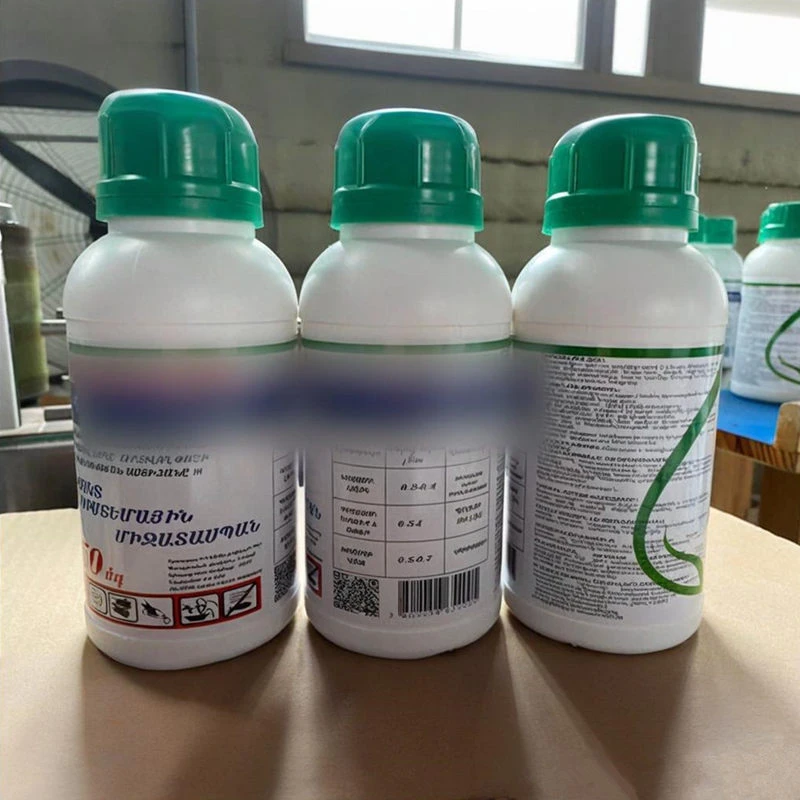
But I’ll end with a word of caution that we repeat to every customer: never apply imazapic without confirming your wheat is IR, and never exceed the recommended application rate. We’ve had growers come to us after making a mistake — applying imazapic to conventional wheat, or using too high a rate because they thought it would work better — and the result was damaged crops and lost revenue. That’s why we have a team of agronomists on staff who are available to answer questions, help you develop a customized application plan, and troubleshoot any issues that come up. We don’t just sell a product; we provide support to make sure you get the best possible results from your herbicide use.
Oxyfluorfen If you’re a wheat farmer weighing your weed management options, or you’re looking to improve your current program to combat resistant weeds, we’re here to help. Our imazapic is sourced from trusted manufacturers, tested for purity, and backed by years of research and on-the-ground experience in wheat fields across North America. We can provide you with detailed application guidelines, recommendations for rotational crops, and tips to minimize environmental impact. To learn more about our product and how it can work for your wheat fields, feel free to reach out to our team to discuss your specific needs and get a custom quote. We’re committed to helping you grow healthier, higher-yielding wheat, and imazapic is a tool that can help you do that safely and effectively.
References
- Bauder, T. A., et al. (2018). Weed Management in Wheat. University of Nebraska-Lincoln Extension.
- Heap, I. (2023). International Survey of Herbicide Resistant Weeds. Weed Science Society of America.
- Senseman, S. A. (2007). Herbicide Handbook (10th ed.). Weed Science Society of America.
- West, J. S., et al. (2019). Imidazolinone-Resistant Wheat: Benefits, Limitations, and Future Directions. Crop Protection, 122, 112-119.
- US Department of Agriculture (USDA). (2021). Herbicide Residue Guidelines for Rotational Crops. USDA Agricultural Marketing Service.
Changzhou Dayilong Bio-Tech Co., Ltd.
With abundant experience, we are one of the most professional imazapic manufacturers and suppliers in China. Please rest assured to buy bulk high quality imazapic made in China here from our factory. Good service and reasonable price are available.
Address: Hundsun Science & Technology Park 3-1, BeiTangHe Road 8, Tianning District, Changzhou City, Jiangsu, China
E-mail: Sales@dayilongbio-tech.com
WebSite: https://www.dayilongagro-chemical.com/
