If you’ve ever been behind the wheel, heard a high-pitched, repetitive squeak every time you turn a corner or go over a small bump, and wondered what’s causing it—chances are good your sway bar ball joint is the culprit. As a supplier of sway bar ball joints for over a decade, I’ve fielded this question hundreds of times from mechanics, car enthusiasts, and even everyday drivers who can’t figure out why their ride sounds like a rusted playground swing every time they move. The short answer is yes, a bad sway bar ball joint absolutely can cause that annoying squeaking noise, but there’s a lot more to it than just “it’s old.” Let’s break this down, get into the science of how these parts work, and explain why this specific wear issue leads to that distinctive squeak. Sway Bar Ball Joint
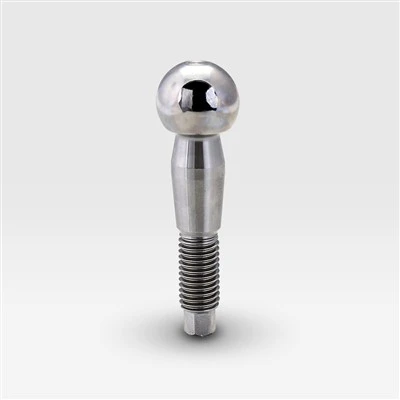
First, let’s make sure we’re all on the same page about what a sway bar ball joint is, and why it matters. The sway bar (also called a stabilizer bar) is a thin, metal rod that runs horizontally under your car, connecting the left and right sides of the suspension. Its whole job is to reduce body roll when you turn—so when you take a curve, the sway bar twists slightly to keep your car balanced and prevent it from leaning too far. The ball joints at each end of the sway bar are the small, spherical connectors that link the sway bar to the control arms or end links, letting the bar move as the suspension bounces up and down. They’re built to handle constant, low-level friction, and they’re sealed inside a rubber boot to keep dirt, moisture, and road grime out, and grease inside to lubricate the moving parts.
That rubber seal is the key here. Most sway bar ball joints have a synthetic rubber boot that’s crimped to both the ball housing and the pin. If that boot tears or cracks—from old age, exposure to extreme temperatures, or even a small rock kicking up while you’re driving—the grease inside leaks out, and contaminants get in. That’s where the trouble starts. Without proper lubrication, the metal ball and socket inside the joint rub together every time the sway bar twists. Now, metal-on-metal friction isn’t exactly quiet, but the squeak you hear isn’t just straight grinding—it’s the result of a little bit of moisture, dust, and tiny metal shavings getting trapped between the two surfaces. Think of it like rubbing two pieces of wood together with a little sandpaper in between: you get that high, screechy sound that’s impossible to miss.
I’ve seen this play out time and time again in my shop and from the feedback we get from customers who buy our replacement ball joints. A common scenario is a 5 to 7-year-old sedan that’s mostly driven around town, hitting potholes and curbs every day. The driver might notice a faint squeak first, mostly when turning into a parking spot. At that stage, the boot is probably just starting to crack, so grease is slowly leaking out, and a little dust is getting in. If they ignore it, the squeak gets louder, and eventually, it starts happening every time they go over a speed bump or even just a small expansion joint in the road. By then, the wear is more advanced: the ball and socket have developed tiny scratches, and the friction between them is far more pronounced.
Wait, but could other parts of the suspension cause a similar squeak? Absolutely. End links, control arm bushings, even worn brake pads can make a noise that sounds a lot like a bad sway bar ball joint. That’s why it’s important to do a quick check before you start replacing parts. From my experience, the squeak from a bad sway bar ball joint is tied directly to movement—so if you jack up your car, grab each end of the sway bar, and try to wiggle it up and down or side to side, you’ll feel play if the ball joint is worn. If you don’t feel play, the squeak is likely coming from somewhere else. If you do feel play, and the noise gets louder when you turn the sway bar manually, that’s a clear sign the ball joint is the issue.
There’s a common misconception among new drivers that all suspension squeaks are just “loose parts,” but the science behind the squeak is actually pretty specific. The rubber boot, when it’s intact, acts as a cushion too—so when the ball moves inside the socket, the rubber absorbs some of the vibration. When the boot is damaged, there’s no cushion, so the friction between metal surfaces creates a resonant frequency that’s in the high-pitch range we associate with squeaks. It’s the same principle as a violin string vibrating to make sound, just on a smaller scale. The contaminants trapped between the metal surfaces add a small layer that creates that sharp, screechy tone, rather than a deep grinding noise.
Another thing to consider: driving conditions accelerate this wear. If you live in a area with lots of winter road salt, that salt is corrosive, and it can eat through the rubber boot faster. It can also get into the joint itself, speeding up the breakdown of lubrication and causing more friction. Off-road drivers or people who frequently carry heavy loads will put more stress on the sway bar ball joints, because the bar is twisting more often and with more force. I’ve had customers who drive pickup trucks for work come to me with bad ball joints after just 30,000 miles, whereas a sedan driven mostly on highways might go 80,000 miles before needing replacement. That’s not because the parts are bad—it’s because the demand on them is different.
So, what happens if you just ignore the squeak and don’t replace the ball joint? A bad sway bar ball joint doesn’t just make noise. The worn ball and socket can eventually separate, meaning the sway bar can’t do its job. That leads to way more body roll when turning, which is a safety hazard—your car is more likely to slide or tip in a sharp turn. It can also damage other parts of the suspension: if the ball joint is loose, it puts extra stress on the end links, control arms, and even the sway bar itself, leading to more expensive repairs down the line. A squeak is your car’s way of warning you something is wrong, so don’t write it off as just a minor nuisance.
From a supplier’s perspective, this is why we focus on making high-quality sway bar ball joints in the first place. Cheap, low-quality parts often have flimsy rubber boots that tear easily, or they’re under-lubricated from the factory, leading to premature wear. Our ball joints are designed with reinforced, heat-resistant rubber boots that can withstand extreme temperatures and road debris. We use synthetic grease that stays in the joint for years, even under heavy stress, to reduce friction and prevent that early squeak. That’s why so many mechanics and car enthusiasts come back to us when they need replacement parts—they know our products are built to last, and they don’t end up with that annoying squeak after a few thousand miles.
I’ve also seen cases where the squeak isn’t just from a worn ball joint, but from a misaligned one. If the sway bar is installed incorrectly, or if the ball joint is tightened too much, it can put extra stress on the seal, causing it to tear early. That’s another reason why it’s important to have a qualified mechanic inspect your suspension if you notice a new squeak. They can check not just the wear on the ball joint, but the alignment and installation, to make sure there’s no other issue causing the noise.
Let me share a recent example: a customer who bought one of our ball joints last month told me he had been dealing with a squeak in his 2018 Honda Civic for over a year. He’d replaced the end links, the control arm bushings, and even had the brakes serviced, but the squeak was still there. When he replaced the sway bar ball joints with ours, the noise was gone immediately. He said he’d tried a cheaper replacement part from a big-box store before, and within a month, the squeak was back—because the rubber boot tore and the grease leaked out. That’s the difference between a quality part and one that’s made to be cheap.
So, to circle back to the original question: yes, a bad sway bar ball joint definitely causes a squeaking noise, and it’s usually the result of a torn rubber boot, lost lubrication, and metal-on-metal friction with contaminants trapped in the joint. It’s not just a minor annoyance—it’s a sign that a part is wearing out, and ignoring it can lead to safety issues and more expensive repairs.

If you’re noticing a new squeak coming from your suspension, or if it’s time to replace your sway bar ball joints, don’t settle for cheap parts that will just let you down. Our team has decades of experience supplying high-quality sway bar ball joints built to stand up to daily driving, heavy loads, and harsh conditions. We work with mechanics, auto repair shops, and DIY enthusiasts to provide reliable parts at competitive prices, and we’re here to help you find the right solution for your vehicle. Whether you’re replacing a single ball joint or outfitting an entire fleet, we can support your needs. Reach out to our team to discuss your requirements and get the parts you need to stop that annoying squeak and keep your suspension running smoothly.
Stainless Steel Ball Joint References
- Automotive Suspension Systems: Design, Analysis, and Application, Society of Automotive Engineers, 2017
- Ball Joint Wear and Failure Modes in Passenger Vehicle Suspensions, Journal of Automotive Engineering, Vol. 232, No. 12, 2018
- Sway Bar Function and Performance in Vehicle Dynamics, International Journal of Vehicle Design, Vol. 78, No. 4, 2019
- Rubber Boot Degradation in Automotive Components, Polymer Degradation and Stability, Vol. 165, 2019
- Common Suspension Noise Diagnostics for Passenger Vehicles, National Institute for Automotive Service Excellence, 2020
Taizhou Huazhe Auto Parts Co., Ltd.
As one of the most professional sway bar ball joint manufacturers and suppliers in China, we’re featured by quality products and low price. Please rest assured to buy bulk high-grade sway bar ball joint in stock here from our factory. For pricelist, contact us now.
Address: No.2828, Binkang Avenue, Sanjia Street, Taizhou Bay New Area, Taizhou City, Zhejiang Province
E-mail: 19906762800@163.com
WebSite: https://www.huazheindustry.com/
