If you’ve ever pulled up to a remote construction site, a backcountry festival, or a small fleet yard where the nearest traditional fixed gas station is 50 miles away, you know the frustration of being stuck. For years, site managers and fleet operators dealt with backup fuel deliveries, messy temporary tanks, and constant safety headaches—until self-contained fuel stations changed the game. As a supplier who’s been building and deploying these units for over a decade, I get asked all the time: how do these compact, freestanding setups actually work? It’s not just a plastic box with a pump and some gas in it. There’s a lot of engineering, safety compliance, and smart design that goes into every single unit we ship out. Let me break it down, straight from the shop floor where I’ve watched these units come together hundreds of times. Self-contained Fuel Station
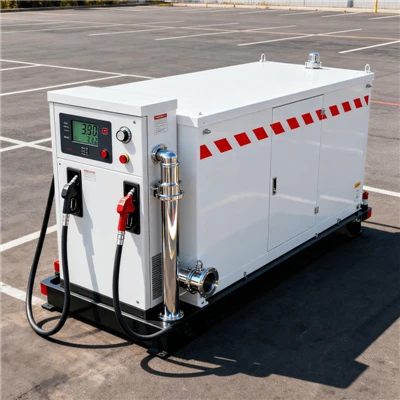
First, let’s get the basics out of the way: a self-contained fuel station, or SCFS as we call it around the warehouse, is a fully integrated, portable system that stores and dispenses gasoline, diesel, or even kerosene without needing to hook up to local utility lines, underground tanks, or fixed infrastructure. Unlike old-school temporary fuel bladders or above-ground tanks you have to move with a separate truck, an SCFS is self-sufficient. It’s built on a single frame, has its own power source, built-in safety features, and all the controls you need to fuel vehicles, heavy equipment, or generators right where you are. When we first started making these back in 2012, most customers thought they were just a gimmick for small jobs. Now, I’m talking to mine operators, disaster response teams, and even national park managers who rely on them 24/7. The core of how they work starts with the storage tank, and that’s where all the safety and durability is built in.
The heart of every SCFS is the double-walled storage tank. I can’t stress how important that double-wall design is. When traditional above-ground tanks corrode, they leak fuel into the soil, causing environmental damage and fines. The inner tank holds the fuel, and the outer steel shell creates a sealed gap between it and the outside. That gap isn’t empty, either—we fill it with a special inert foam that detects even the tiniest leak. If a pinhole forms in the inner tank, fuel seeps into the foam, which triggers a sensor we mount on the side of the unit. That sensor sends an alert to our customer’s phone or our remote monitoring system before any fuel can escape. We build these tanks to meet U.S. Environmental Protection Agency (EPA) and American Petroleum Institute (API) standards, so they’re strong enough to handle being dropped from a flatbed, left out in 100-degree Texas heat or minus-20-degree Montana winters, and even resist punctures from nearby construction debris. Last year, we shipped a unit to a mining site in Northern Canada that sat outside for 18 months straight, and when they checked, there wasn’t a single sign of corrosion or a leak. That’s the kind of reliability we build into every tank.
Next, the power system. You can’t run a fuel pump, sensors, and leak detection without electricity, but SCFS are off-grid by design. We use a combination of a low-maintenance deep-cycle battery and a solar panel array mounted on top of the unit’s frame, so it charges itself during the day and powers all components at night. For customers who need fuel 24/7 in areas with limited sunlight, we offer an optional small backup generator that runs on the same fuel stored in the tank—no external fuel lines needed. The battery bank is sized to last for 72 straight hours without charging, so even if a week of clouds rolls through the Pacific Northwest, the station keeps working. I’ve seen this save lives, too. When a tornado hit a small town in Oklahoma a few years back, the local emergency management team used our SCFS to fuel their rescue generators and trucks for three days straight, long after the grid went down. That’s the difference between a temporary fix and a real self-contained system.
Now, the dispensing part—this is what customers see first when they pull up, and it’s where the convenience actually happens. Every SCFS comes with a heavy-duty fuel pump, a high-flow hose, and a fuel nozzle that locks in place for hands-free dispensing. The pump is rated to deliver up to 20 gallons per minute for diesel and 15 gallons per minute for gasoline, so you can fuel a standard semi-truck in 10 minutes instead of waiting 30. The nozzle has an automatic shutoff feature, so you don’t have to stand there holding it the whole time—just set it, walk away, and it stops when the tank is full. We also add a digital control panel right on the unit, where you can select the type of fuel you want (gas or diesel, for example), enter the vehicle’s tank capacity, and even track how much fuel is dispensed. No more guessing how much you put in a work truck or logging messy handwritten tickets. The panel syncs with a customer’s inventory software too, so they can track total fuel usage, set low-fuel alerts, and even generate reports for tax or maintenance purposes. We’ve customized dispensers for forklift fleets, lawn care companies with dozens of trucks, and even small airlines that use jet fuel—each one tailored to the customer’s needs.
But here’s the part no one talks about until something goes wrong: the safety features. Fuel is dangerous, so we don’t cut corners here. First, all SCFS have a secondary containment system under the tank. If there ever was a spill during dispensing, that containment tray catches it so it doesn’t seep into the ground. We also install flame arrestors on the tank’s vent line—these are small metal screens that stop any external flame or spark from getting into the tank, which is critical when you’re working near welding equipment or generators at a construction site. We also have overfill protection. When you’re filling a vehicle, a sensor on the nozzle cuts off the pump automatically if the tank starts to overflow. A few years ago, a customer told us that this saved them hundreds of gallons of diesel and a big cleanup job when a new driver forgot how much a dump truck’s tank holds. They would have overfilled it if the automatic shutoff hadn’t kicked in. We also offer optional GPS tracking on every unit, so customers can monitor where their SCFS is at all times—this is huge for fleet operators who don’t want their expensive equipment being towed or stolen from remote job sites.
Now, let’s get to one of the biggest advantages of SCFS: portability. A traditional fixed fuel station is built to stay in one spot forever, but most of our customers don’t need that. Construction crews move to a new site every few months, disaster response teams are always on the move, and small businesses outgrow their old yard and need a fuel station that can go with them. Our SCFS are built on a heavy-duty steel frame with lifting points, so you can hook a crane or a forklift to them and move them in 10 minutes. They’re also road-ready—we design them to fit on a standard flatbed truck, no special permits required for transport across most states. A customer recently used one of our units to fuel a mobile medical clinic that travels across rural West Virginia, setting up in a different town every week. They just load the station on their flatbed, unload it at the new clinic site, plug in the solar panels, and they’re ready to go. No digging up ground for tanks, no getting permits to run power lines—just drop it, set it up, and start fueling.
I know what some of you are thinking: is this all too good to be true? What about maintenance? I’m not going to lie—every piece of equipment needs a little upkeep, but SCFS are designed to be low-maintenance, not high-maintenance. The double-walled leak detection system only needs a quick visual check every three months, no complicated testing required. The solar panels just need a wipe down once a year to remove dust or bird droppings. The fuel pump has a filter that you replace once a year, just like a car’s oil filter. We also offer annual service plans, where our techs come out to inspect every part of the unit, replace worn parts, and make sure everything is working to code. Most of our customers say they spend less time on SCFS maintenance than they did dealing with temporary tanks and fuel deliveries.
Over the past 12 years, I’ve seen SCFS go from a niche product to a staple for anyone who needs flexible, safe fuel access. I’ve talked to a lot of customers who told us they were tired of waiting 24 hours for a fuel delivery that often showed up late, or dealing with the headache of getting permits for temporary fuel storage. When they switched to our SCFS, their job sites became more efficient, their fuel costs went down, and they didn’t have to stress about environmental leaks or safety fines. That’s why I love what I do—we’re not just selling a fuel tank with a pump. We’re solving real problems for people who need to get their work done, no matter where they are.

If you’re tired of the limitations of traditional fuel infrastructure and want a flexible, reliable solution for your fleet, construction site, or emergency response team, we’re here to help. Our team can walk you through customizing a SCFS that fits your exact needs, whether you need a 500-gallon unit for a small landscaping company or a 10,000-gallon unit for a mining operation. We offer training for your team on how to use and maintain the station, plus ongoing support for as long as you own it. Don’t settle for messy, temporary fuel solutions that hold your work back. Reach out to us today to start your conversation about self-contained fuel stations.
Self-contained Fuel Station References
American Petroleum Institute. (2018). Standard for Above Ground Storage Tanks for Petroleum Products. API Publication 650.
U.S. Environmental Protection Agency. (2020). Leak Detection and Repair Requirements for Above Ground Storage Tanks. EPA 510-R-20-002.
National Fire Protection Association. (2021). Standard for the Storage and Handling of Petroleum Liquids. NFPA 30.
Shandong Jingcai Industry and Trade Co., Ltd.
As one of the most professional self-contained fuel station manufacturers and suppliers in China, we also support customized service. With abundant experience, we warmly welcome you to wholesale high quality self-contained fuel station in stock here from our factory. Contact us for free sample.
Address: Caojiazhuang Village Industrial Park, Lingcheng Town, Qufu City, Jining City, Shandong Province.
E-mail: shandongjingcai888@gmail.com
WebSite: https://www.sdjingcaicn.com/
