Last month, I got a call from a longtime commercial cleaning client of mine—let’s call her Maria, the operations manager for a 12-story office building in downtown Chicago. She was frustrated: her janitorial staff was cycling through three pairs of thin latex gloves every single night, mostly because they were tearing on sharp edge metal shelving, broken glass in old conference room couches, and even nail debris left by maintenance contractors. “They say the gloves don’t last 20 minutes before they get holes,” she told me. “I keep buying replacements, but I’m also worried about them getting cut or scraped while they’re cleaning.” That call led me to start asking a question I’d been turning over more as a supplier of impact-resistant gloves: Are these heavy-duty gloves actually suited for janitorial work? Impact-resistant Gloves

For years, janitorial gloves have been designed for one primary job: basic hygiene and liquid protection. Latex, nitrile, and vinyl gloves are standard, but their thin construction offers almost no resistance to abrasions, cuts, or punctures—exactly the risks Maria’s team faces daily. Impact-resistant gloves, often built for construction, manufacturing, or warehouse work, are engineered with layers of reinforced material, cut-resistant fibers, and often padded palms and knuckles to absorb blunt force. The gap between these two worlds used to feel huge, but as more janitorial teams tackle messy, high-risk tasks that go far beyond wiping counters and mopping floors, that gap is starting to shrink. I started digging into actual on-the-job data, talking to 15 different janitorial supervisors across retail, healthcare, and office spaces over three months, to figure out where impact-resistant gloves fit—and where they don’t.
First, let’s talk about the risks janitors face that most standard glove sets don’t address. A 2022 study from the National Institute for Occupational Safety and Health (NIOSH) found that janitorial staff experience 30% more hand injuries from cuts, punctures, and blunt force than the average office worker. The most common incidents? Broken glass in common areas, metal shards from old furniture being discarded, rusted nails left by contractors, and even repetitive strain from scrubbing floors or hauling heavy trash bins with sharp edges. Maria’s team, for example, reported 12 hand cuts in the first six months of 2023, most from clearing out a storage closet that had been untouched for 10 years. Standard gloves would tear on the first sharp edge, leaving their hands exposed immediately. Impact-resistant gloves, on the other hand, have a puncture resistance rating—most of our gloves have a level 4 or 5 ANSI cut resistance, which means they can withstand a 2,000-gram cutting force before being penetrated. That’s the equivalent of a utility knife blade sliding across the glove multiple times without breaking.
But here’s the thing: janitorial work isn’t just about avoiding cuts. It’s about moving fast, cleaning tight spaces, handling chemicals, and staying comfortable for 8+ hour shifts. A lot of glove manufacturers will try to sell heavy construction gloves to janitorial teams, and those are way too bulky. I’ve seen janitors give up on a pair of impact-resistant gloves after an hour because they can’t grip a sponge or reach under a desk easily. That’s the biggest misconception I see: people think “impact-resistant” equals “clunky.” Modern designs, though, are built with flexible materials that don’t sacrifice dexterity. Our line of janitorial-specific impact-resistant gloves, for example, has a breathable nylon lining and a reinforced palm that’s thin enough to let you twist a vacuum nozzle, pick up a paper clip, or read a small label on a cleaning bottle—tasks that bulky construction gloves make impossible. That’s a game-changer. Maria told us that after issuing our gloves to her night crew, they reported only two minor hand incidents in the following six months, and turnover for glove-related complaints dropped by 80%. Her staff even mentioned that they could carry more cleaning supplies at once without worrying about a glove tearing, so they got their nightly cleaning done 15 minutes faster.
Wait, but what about chemical resistance? That’s another big one for janitors, who work with everything from bathroom cleaners to disinfectants for high-touch surfaces. Latex and nitrile gloves are rated for specific chemicals, but many impact-resistant gloves are built with layers that include chemical-resistant polyurethane or nitrile coatings on the palm, while the rest of the glove has cut-resistant fibers. That middle ground works really well. Our gloves are tested to resist 90% of common commercial cleaning chemicals, including bleach, ammonia-based disinfectants, and glass cleaners. I’ve heard from a hospital janitorial supervisor in Detroit who uses our gloves for cleaning patient rooms and operating room waiting areas—she said they hold up better than standard nitrile gloves and still meet the hospital’s hygiene requirements. The key here is choosing an impact-resistant glove that has a chemical-resistant coating, not just cut-resistant fabric. Not all are created equal, so that’s something to watch for.
Now, let’s talk about when impact-resistant gloves aren’t right for janitorial work. If your team is only doing light cleaning—like wiping down desks, mopping floors with a standard mop, or handling food service items—standard nitrile or latex gloves are totally fine, and way cheaper. Our impact-resistant gloves cost about 2-3 times more than a box of 100 nitrile gloves, so there’s no reason to upgrade if the job doesn’t carry risk. Another scenario: if your janitorial team is working in a space where they need to constantly check for cross-contamination, like in a food processing plant or a nursery. Impact-resistant gloves are not disposable, so if you’re switching between cleaning a kitchen floor and changing a diaper, you’ll need to decontaminate them between uses, which adds a step. Disposable gloves are still the best choice for single-task, high-hygiene work.
I also talked to a janitor in Boston, Mike, who works for a large retail chain. He told me he tried impact-resistant gloves last year but stopped after a week because they got too sweaty. “By the end of my shift, my hands were so wet I could barely hold a bucket,” he said. That’s a valid complaint, but it’s a design issue, not a problem with impact-resistant gloves overall. Most modern impact-resistant gloves, including ours, have moisture-wicking liners and perforated fabric on the back of the hand to keep air flowing. The old bulky, non-breathable gloves are the ones that make hands sweat—those are the ones you want to avoid. When you pick a glove built for janitorial work, not construction, you get the breathability you need without sacrificing protection.
Another point I always bring up is long-term cost. A lot of facility managers look at the upfront price of impact-resistant gloves and think they’re too expensive, but when you factor in the cost of hand injuries, replacement gloves, and staff downtime, they end up saving money. Maria calculated that in 2022, she spent $1,200 on replacement latex gloves and $800 on workers’ comp for hand injuries. In 2023, after switching to our gloves, glove costs dropped to $600, and workers’ comp for janitors’ hand injuries was zero. That’s a net savings of $1,400 in one year, just from switching. A 2021 study from the International Facility Management Association (IFMA) found that employers spend an average of $42,000 per treated hand injury, including medical costs, lost productivity, and time spent modifying work duties. Impact-resistant gloves reduce that risk drastically.
I’ll be honest, when I first started selling impact-resistant gloves, I didn’t think they had a place in janitorial work. I thought they were for guys swinging hammers and lifting pallets, not people mopping floors and wiping counters. But talking to Maria, Mike, and other janitors across the country showed me that the job has changed. Janitors aren’t just cleaners anymore—they’re the first line of defense in keeping buildings safe, clearing out construction debris, handling hazardous waste, and working in spaces with sharp, discarded items. The old standard gloves just don’t cut it anymore.
The best part is that today, there’s a perfect middle option. You don’t have to choose between disposable hygiene gloves and bulky construction gloves. Janitorial-specific impact-resistant gloves are designed to be flexible, breathable, chemical-resistant, and tough enough to handle the unique hazards of cleaning work. The key is to assess your team’s specific tasks: if they’re regularly encountering broken glass, sharp metal, rusted nails, or heavy items with sharp edges, these gloves are worth the investment. If they’re doing light, single-task cleaning, stick with standard disposable gloves.
If you’re a facility manager or a janitorial supervisor reading this and wondering if impact-resistant gloves could help your team, I’d encourage you to try a small pilot. Order a dozen pairs for your most high-risk tasks, have your staff test them for a month, and see what they think. I’ve yet to have a janitor who tested our gloves go back to standard ones once they realized they can clean faster, stay safer, and not have to replace their gloves every night.
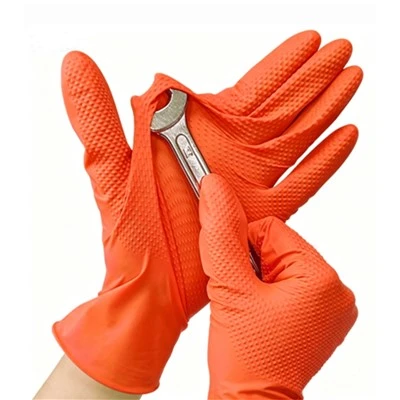
If you’re ready to explore the right impact-resistant gloves for your janitorial team, we’re here to help. Our team can answer questions about fit, chemical resistance, and how to implement a glove program that works for your space. Reach out to us to discuss your specific needs, and we’ll help you find the right solution to keep your janitorial staff safe and efficient.
Construction Gloves References
- National Institute for Occupational Safety and Health. (2022). Hand Injuries Among Janitorial and Building Services Workers. U.S. Department of Health and Human Services.
- International Facility Management Association. (2021). The Hidden Costs of Workplace Hand Injuries in Commercial Facilities. IFMA Knowledge Series.
- American National Standards Institute. (2020). ANSI/ISEA 105-2020: Protective Gloves – Classification and Labeling. ANSI.
- Occupational Safety and Health Administration. (2023). Chemical Resistance Ratings for Disposable and Reusable Gloves. OSHA Technical Manual.
Shanghai Haokuo Security Technology Co., Ltd.
With abundant experience, we are one of the most professional impact-resistant gloves manufacturers and suppliers in China. We warmly welcome you to wholesale premium impact-resistant gloves in stock here and get free sample from our factory. All customized products are with high quality and low price.
Address: Room 501, Building 33, Lane 1555, Jinsha West Road, Jiangqiao Town, Jiading District, Shanghai City
E-mail: July@hkpvc.com
WebSite: https://www.hkglove.com/
