If you’ve ever picked up a heavy, stacked shipment of warehouse parts, farm produce, or industrial machinery, chances are it was wrapped in—or actually resting on—a wooden crate. For years, these humble boxes have been the unsung workhorses of global supply chains, trusted to haul everything from wine barrels to car transmissions across continents and back. As someone who’s been in the wooden crate supply business for over a decade, I’ve lost count of how many times customers have emailed or called asking the same question: “How long will this crate last, if I take good care of it?” It’s not a trivial question, either—for small business owners sourcing inventory, industrial operations budgeting for shipping materials, or farmers counting on consistent delivery timelines, the average lifespan of a well-maintained wooden crate directly ties to your bottom line. Wooden Crate

Let’s start by dispelling a common myth: wooden crates aren’t one-size-fits-all. Their lifespan depends less on random chance and more on four key factors: the type of wood it’s made from, how it’s used, how it’s stored, and how it’s repaired over time. I’ve seen crates made from pine fall apart in two years, and others built from oak or maple that have lasted 30+ years, still functional and strong enough to haul heavy cargo. This isn’t magic—it’s science, paired with intentional care that any crate owner can follow.
First, the foundation: wood species. Not all lumber is equal for crating purposes. Softwoods like pine, spruce, and fir are the most common for standard, lightweight shipping crates. They’re affordable, easy to cut, and light enough to avoid adding unnecessary weight to shipments, which keeps fuel costs down. But their downside is porosity and vulnerability to rot, pests, and moisture. A pine crate used to ship garden tools and stored outdoors, exposed to rain and snow week after week, will typically last 5 to 10 years if well-maintained. That said, if you use that same pine crate indoors, on a flat, dry warehouse shelf, and never stack it heavier than its rated load, it could stretch that lifespan to 15 years or more.
Hardwoods, on the other hand, like oak, maple, and ash, are a different story. Denser, tighter-grained, and naturally more resistant to moisture and pest damage, these are the crates we build for heavy industrial use, custom cargo, or applications where durability is non-negotiable. A well-made hardwood crate, built to hold 2,000 pounds of machinery, used on closed warehouse floors, never left exposed to the elements, and cared for properly, can easily last 25 to 35 years. I remember a crate we made back in 1998 for a local manufacturing company to ship parts for their old CNC machines. They retired the machine last year, and the crate was still strong enough that they repurposed it as a workbench in their back shop. That’s the kind of longevity hardwood brings to the table, and it’s one of the reasons why many long-term clients stick with us for repeated crating needs.
Next, how a crate is used—this is the biggest variable that’s in the hands of the owner, not the supplier. Let’s break down common use cases and their impact on lifespan. Crates used for shipping, for example, go through more stress than stationary crates. They’re loaded onto forklifts, dragged across concrete yards, stacked in ships’ holds that swing and shift, and exposed to temperature swings and humidity changes during cross-country or ocean voyages. A crate that’s only used for local, overland shipping, never dropped or stacked beyond its weight rating, will last far longer than one that’s repeatedly air-shipped, dropped, or stacked with crates that exceed their load limit. I once had a client who ran a regional appliance delivery service; they used our pine crates to ship small refrigerators and stoves. Their drivers were instructed to never stack more than two crates high, and to avoid dragging crates across pavement—instead, they used dollies. Those crates lasted an average of 8 years, with many still in service after a decade. When a crate is used roughly—dragged across gravel, overloaded, or left out in a rainstorm for weeks on end—its lifespan drops drastically. A pine crate treated this way might only last 1 to 2 years before it’s too splintered or weakened to use.
Storage is another make-or-break factor. Most people don’t realize that a crate’s life doesn’t end when it’s not in use—how you store it during lulls between shipments or projects is just as important. If you leave a wooden crate piled outside, sitting on wet ground, or covered with tarps that trap moisture against the wood, you’re setting it up for rot and pest damage. Fungus and mold thrive in damp, dark conditions, and once they take hold in a crate’s beams or panels, they eat away at the wood’s structure, weakening it and making it unsafe to use for heavy cargo. Termites and carpenter ants are another risk, especially in warm, humid climates. We’ve seen crates returned to us by clients in Florida that were left in a backyard for six months, half-buried in mulch—by the time they wanted to reuse them, they were riddled with termite holes and unusable. On the flip side, storing crates indoors, on elevated pallets or racks, in a space with consistent temperature and low humidity, will extend their life dramatically. Even stacking crates correctly matters: never stack a heavier crate on top of a lighter one, and never stack crates beyond three or four high, especially if they’re not reinforced. I always advise clients to designate a dry, covered storage area for unused crates, and to lift crates onto pallets with forklifts or dollies instead of dragging them—this avoids cracks and splits in the base beams that let moisture in.
Repair and maintenance might be the most overlooked part of extending a wooden crate’s lifespan. You don’t need to be a carpenter to keep crates in good shape; small, regular checks go a long way. Every time you unload a shipment, take 10 minutes to inspect your crates: look for splintered edges, loose nails or screws, cracks in the beams, or soft spots where rot might be starting. If you spot a small crack in a side panel, you can reinforce it with a metal bracket or a nail (or a screw, which is better for holding over time) instead of letting it spread. Loose nails should be pulled and replaced—rusty nails are a big no, too, because they weaken and break easily over time, and can leave gaps that let moisture get in. For crates that have minor rot, as long as the damage is only on the outer panel, you can cut out the rotten section and replace it with a matching piece of wood; the structural beams (the ones that run along the top and bottom, supporting the weight) are the most important to keep intact. We’ve had clients who repair their crates every time they use them, and some of those crates have been in regular use for 20+ years. On the flip side, ignoring small issues—like a loose nail or a tiny crack—can turn into a broken crate after just a few more uses.
Of course, there are exceptions to every rule. I once shipped a custom crate to a winery in Oregon that was built from old-growth Douglas fir, designed to hold a crate of vintage wine. They used it once, then stored it in a temperature-controlled wine cellar, and 40 years later, they contacted us to make a duplicate because they wanted to keep using the original for their special reserve wines. That’s a perfect example of how low-stress, controlled use and proper storage can extend a crate’s life far beyond the average. On the other end, we had a client who used cheap, untreated pine crates to ship construction debris around their jobsite. Those crates were rained on, dragged over dirt, and sometimes dropped from scaffolding—they needed replacement every 6 months. It all comes back to the variables we’ve talked about.
Now, if you’re a business owner trying to calculate the value of investing in long-lasting crates, here’s what I tell clients: the upfront cost of a higher-quality, properly built wooden crate pays for itself over time. A $50 standard pine crate might only last 5 years, meaning you’re spending $10 a year on it. A $150 custom hardwood crate, built for heavy use, might last 30 years, meaning you’re spending $5 a year on it. That’s half the cost, plus you’re reducing waste and the hassle of buying new crates every few years. It’s also better for your supply chain—consistent, reliable crates mean less chance of damaged cargo or delayed shipments because a crate broke mid-transit.
At the end of the day, the average lifespan of a well-maintained wooden crate isn’t a fixed number. It’s a range, shaped by the choices you make: what wood you choose, how you use it, how you store it, and how you care for small issues before they become big problems. For our part, as wooden crate suppliers, we don’t just build crates—we build products that are meant to be reused, repaired, and relied on for years, even decades, because we know how critical these boxes are to our clients’ operations.
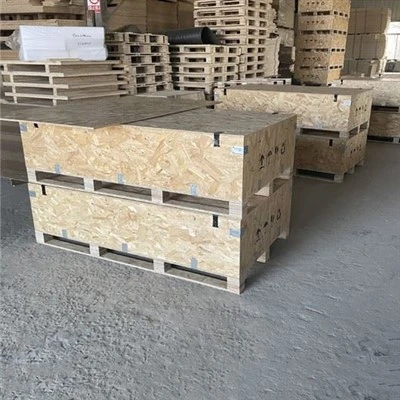
If you’re looking to source crates for shipping, storage, or custom cargo, or you want to learn more about how to maximize the lifespan of your existing crates, we’re here to help. Whether you need a small batch of pine crates for local deliveries or a custom-built hardwood crate for heavy industrial use, we can work with you to build something that fits your needs and budget.
Wooden Box References
- Forest Products Laboratory, U.S. Department of Agriculture. (2010). Wood Handbook: Wood as an Engineering Material. U.S. Government Publishing Office.
- American Wood Protection Association. (2021). Standard for Wood Products: Protection, Treatment, and Performance. AWPA.
- Supply Chain Sustainability Coalition. (2019). Reusable Packaging Lifespan and Optimization Report. Supply Chain Sustainability Coalition.
Nanjing Ruihe Packaging Technology Co., Ltd.
As one of the most experienced wooden crate manufacturers and suppliers in China, we offer a wide range of products with superior quality. Please feel free to wholesale premium wooden crate made in China here from our factory. Welcome to contact us for more details.
Address: No.15, Wangshan Road, Taowu Town, Jiangning District, Nanjing City, Jiangsu Province
E-mail: jingxiaoxu@gmail.com
WebSite: https://www.ruihepackaging.com/
