If you’ve ever lived in a humid climate and wondered why your swimming pool heat pump works so much differently here than it would in a dry desert or a mild coastal area, you’re not alone. I’ve been in the pool heat pump business for over 12 years now, and one of the most common questions I get from customers in places like the Southeast U.S., the Gulf Coast, or parts of Australia is: “How can a heat pump that runs on air even keep my pool warm when the air feels like a steam bath half the year?” It’s a fair question, because at first glance, humid air feels heavy and sweaty—like it should make things cooler, not warmer. But the science behind how these machines work in high-moisture environments is actually pretty straightforward, and it’s the reason we design our heat pumps specifically to handle that extra humidity. Let me break it down for you. Swimming Pool Heat Pump

First, let’s start with the basics of how any pool heat pump works, because once you get that, the “humid climate part” makes a lot more sense. A heat pump isn’t like a regular electric heater that makes heat from electricity. It’s more like an air conditioner running in reverse. Instead of taking heat out of your home and dumping it outside, it takes heat from the surrounding air (even when it’s cool!) and moves it into your pool. The core parts are four: a compressor, an evaporator coil, a condenser coil, and a refrigerant that flows through all of them.
Here’s the simplified version of the cycle: The refrigerant is a special fluid that boils at a much lower temperature than water, so it can turn from a liquid to a gas even at temperatures above freezing. When cold liquid refrigerant flows into the evaporator coil (which sits on the outside of the heat pump, exposed to the air), it absorbs heat from that air and turns into a low-pressure gas. That gas is then compressed by the compressor, which squeezes it so tight its temperature shoots up—sometimes to 150 degrees or more, even if the outside air is only 70 degrees. Now that it’s hot high-pressure gas, it flows into the condenser coil, which is connected to your pool’s plumbing. The hot gas gives off its heat to the water flowing through the coil, cooling down and turning back into a liquid, and that heated water gets pumped right back into your pool. The liquid refrigerant then travels through an expansion valve, where it coofs back down to the low pressure needed to start the cycle all over again.
So far, so standard—this is how every heat pump works, no matter the climate. But humid climates add a variable that changes how the evaporator coil does its job: water vapor in the air. Humidity is just water suspended in the air, right? Warm air can hold a lot more water vapor than cool air, so in places with high humidity, that means there’s a lot of extra moisture floating around. When air flows over the evaporator coil of your heat pump, which is always colder than the surrounding air, something called condensation happens—like how your cold soda can sweats on a hot day. The water vapor in the warm air hits the cold coil, turns into liquid, and drips off. That’s the same moisture that makes your bathroom mirror fog up after a hot shower, just on a bigger scale.
In a humid climate, that condensation isn’t a flaw in the heat pump—it’s actually part of why it works so well. Wait, let me explain that. When water vapor turns from a gas to a liquid, it releases what scientists call latent heat. That’s the same heat you feel when you step out of a swimming pool on a hot day and the water on your skin evaporates—your body is absorbing that latent heat, making you feel cold. But for the heat pump, that’s a bonus. The evaporator coil isn’t just absorbing sensible heat—the kind you feel as temperature from the air—it’s also absorbing that latent heat from the condensing water vapor. That means there’s more total heat available in the air for the pump to pull in, even on days when the air temperature is moderate. On a dry day, there’s no water vapor to condense, so the pump only has that sensible heat to work with. On a humid day, that latent heat adds extra fuel to the cycle, so the pump can heat your pool faster or more efficiently.
I see this play out every summer with our customers in Florida, for example. When it’s 85 degrees and 80% humidity, their heat pumps will often run at a higher efficiency than on a dry 95-degree day in Arizona. That’s not because our pumps are magic—it’s because the latent heat from the condensation is adding to the total heat they can extract. Of course, there’s a limit here. If the temperature drops too low, even with high humidity, the air can’t hold enough water vapor to release much latent heat. Once the air temperature gets below about 50 degrees, latent heat stops being a big factor, and the pump has to rely mostly on sensible heat. But in most humid climates, the pool season is when temperatures are above that 50-degree mark, so that extra latent heat is a huge advantage.
But wait—humidity can also be a challenge for heat pumps if they’re not designed right. I’ve heard from customers who bought cheap, off-brand heat pumps a few years ago, and they ended up with units that would freeze up in the middle of a humid summer day. How does that happen? If the evaporator coil is too cold, or if the air flow over it is too slow, the condensation on the coil can turn into ice instead of dripping off. That ice builds up, blocks the air flow, and the pump can’t absorb any more heat—even with all that humidity around. That’s why at our company, we design our heat pumps with defrost cycles that are specifically tuned for humid climates. Some off-brand units use a basic defrost cycle that only kicks in when the temperature drops, but our defrost sensors track both temperature and humidity, so they only activate when ice is actually likely to form. That means our pumps run more efficiently, not wasting energy defrosting when it’s not needed, and they never get stuck in a cycle where ice shuts them down in the middle of July.
Another thing we’ve learned about humid climates is that the moisture in the air also affects how the heat pump interacts with your pool. When a pool is warm, it evaporates water into the air, which raises humidity around the pool deck. That’s why you often feel sticky near a covered pool or a pool that’s been running for a while. But if the air around the pool is too humid, it can slow down the evaporation from the heat pump’s evaporator coil? Wait, no—actually, the pool’s own humidity is a side effect, not a problem for the pump. The real thing to watch out for is if you don’t have proper drainage for the condensation the pump produces. A standard heat pump in a humid climate can produce 50 to 100 gallons of condensation per day during peak summer use. That water is perfectly clean, like distilled water, but if it drains into your pool area, it can cause mold or mildew around the foundation, or even make the deck slippery. That’s why we include a dedicated condensation drain line with every unit we sell, and we offer free installation guidance to make sure it’s connected to your home’s existing drain or a dry well in the yard.
I know what some of you are thinking: “If humidity helps the pump absorb heat, why do I feel so sticky when I’m standing next to a heated pool in summer?” Good question. The sticky feeling is because the pool’s evaporation is adding even more moisture to the air around you, and your own sweat can’t evaporate to cool you down. That’s a comfort issue, not a heat pump issue. The pump is still doing its job—using that extra latent heat to keep your pool warm. In fact, a properly sized heat pump for a humid climate will often keep your pool at a consistent 82 or 84 degrees, even when the afternoon heat and humidity spike, better than any gas heater could. Gas heaters work by burning fuel to make heat, so they don’t care about humidity, but they’re way more expensive to run, and they add extra carbon emissions. The heat pump, even with that condensation, is using way less energy because it’s taking free heat from the air, not burning fuel.
Let me give you a real example from a customer I worked with last year. She lives in Atlanta, which has hot, humid summers and mild winters, and she was tired of paying $300 a month to run her old gas heater to keep her 15,000-gallon pool warm. We installed one of our mid-sized heat pumps two summers ago, and her first year’s utility bill for the pool was less than $80. She told me she still can’t get over it, especially on August days when the humidity is so thick you can “cut it with a knife.” That’s exactly the scenario I’m talking about—the pump is using that latent heat from the humid air to work efficiently when it matters most.
So what should you look for if you’re buying a pool heat pump for a humid climate? First, make sure it’s designed with humidity-specific defrost cycles, like I mentioned earlier. A lot of budget brands skip this, and you’ll end up with a unit that freezes up and stops working when you need it most. Second, check the unit’s HSPF rating— that’s the Heating Seasonal Performance Factor, which measures efficiency over a full season. Our pumps have an HSPF of 10 or higher, which is better than most standard units, and it’s calculated based on performance in warm, humid conditions, not just mild temperatures. Third, look for a unit with a large evaporator coil. A bigger coil gives more surface area for the air to flow over, so it can absorb more heat and condensation, which is key in humid climates.
And here’s a tip that most salespeople won’t tell you: when sizing your heat pump for a humid climate, you might not need a bigger unit than you would in a dry climate. Because of that extra latent heat, a unit that works for a 15,000-gallon pool in Phoenix will often work for a 15,000-gallon pool in Miami, even though Miami has way more humidity. That’s a big deal because a smaller unit costs less upfront and runs more efficiently. The mistake I see a lot of customers make is over-sizing their heat pump because they think they need more power for humid air, but that’s not the case. The key is getting the right size for your pool’s volume and the average temperature of your pool season, not the humidity.
If you’re still on the fence about whether a heat pump is right for your humid climate, just think about how much time you spend in your pool. We build our pumps to last 10 to 15 years, with rust-resistant cabinets and corrosion-proof coils, because salt air and humidity can be hard on equipment. We also offer a 3-year parts warranty and 24/7 customer support, because we know that when your pool pump breaks in the middle of July, you don’t want to wait days for a technician to show up.
At the end of the day, the science of how a pool heat pump works in humid climates boils down to this: humidity isn’t an enemy—it’s a source of free heat. The condensation that forms on the evaporator coil releases latent heat that the pump uses to warm your pool, making it more efficient than it would be in dry conditions, as long as the unit is designed to handle that extra moisture. Cheap, generic pumps can fail in humid areas because they don’t account for that condensation, but our units are built specifically to thrive in places where the air feels like a wet blanket half the year.
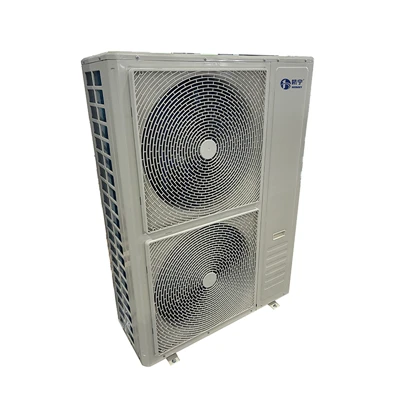
If you’re ready to upgrade your pool heating and stop paying exorbitant gas bills, or if you’re building a new pool and want an efficient, reliable heating solution, we’re here to help. Whether you have a small backyard pool in Georgia or a large commercial pool in Texas, we can help you pick the right size and model to fit your needs. We offer free, no-obligation consultations, so you can get all your questions answered before you make a decision. Don’t let humid weather keep you from enjoying your pool all season long—reach out to us today to start the conversation about your pool heat pump needs.
Commercial Water Heater References
Heating, Ventilating, and Air Conditioning: Principles and Practice, 7th Edition. McGraw-Hill.
Pool Heating Efficiency and Climate Considerations. Association of Pool & Spa Professionals.
Latent Heat Transfer in Air-Source Heat Pumps for Humid Applications. International Journal of Refrigeration.
Hangzhou Honny Heat Energy Technology Co., Ltd.
We are one of the most experienced swimming pool heat pump manufacturers and suppliers in China. With a professional production team, we are able to meet the needs of the majority of our customers. Please feel free to wholesale customized swimming pool heat pump from our factory. Also, quotation is available.
Address: Dingshan Village, Wenyan Subdistrict, Xiaoshan District, Hangzhou City, Zhejiang Province
E-mail: 524435406@qq.com
WebSite: https://www.hnrnkj.com/
